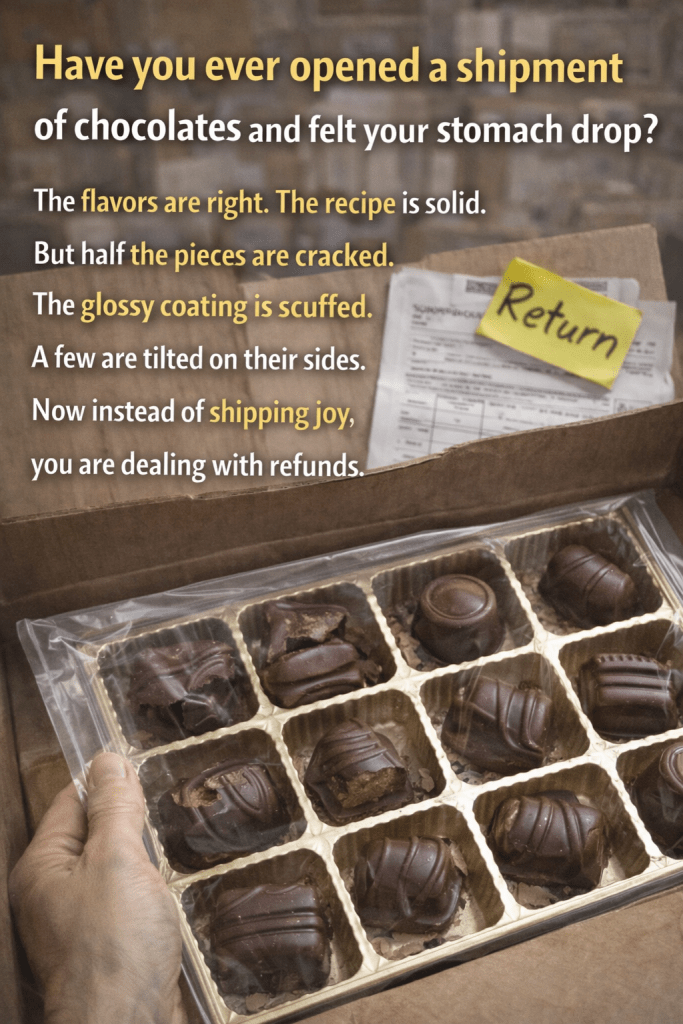
Have you ever opened a shipment of chocolates and felt your stomach drop? The flavors are right. The recipe is solid. But half the pieces are cracked. The glossy coating is scuffed. A few are tilted on their sides. Now instead of shipping joy, you are dealing with refunds.
Crushed candy is rarely about taste. It is usually about structure.
Candy boxes are more than containers. They are protection systems. If the structure is weak, pressure from stacking and transport presses down on the lid. That pressure transfers directly to the candy inside.
Start by thinking about board thickness. Lightweight cartons may look fine sitting on a shelf, but once they are stacked in transit, the top panel can flex. When the lid dips inward, even slightly, delicate chocolate shells can fracture.
Now imagine pressing gently on the top of a thin box. You feel it give under your fingers. That same pressure happens during shipping, only heavier and repeated many times.
Upgrading board weight creates resistance. A sturdier box keeps its shape under stacking pressure. When the top panel stays firm, the candy stays safe.
Next, consider internal support. Loose pieces inside a wide-open space move during transport. Each bump in the road shifts them slightly. That movement causes rubbing. Rubbing creates scuffs. Scuffs lower perceived freshness.
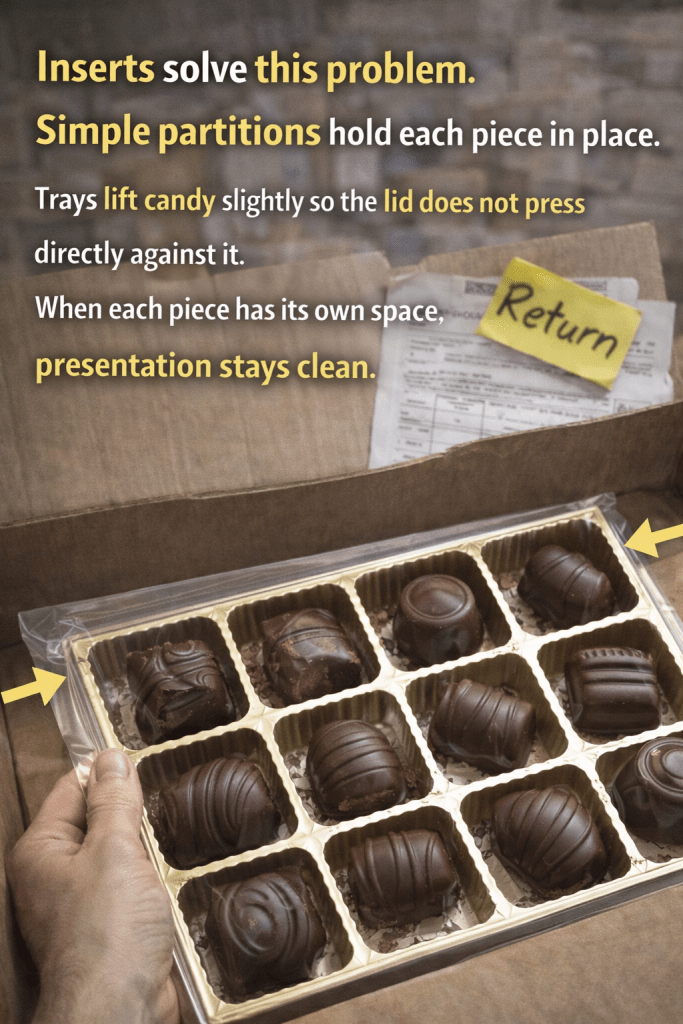
Inserts solve this problem. Simple partitions hold each piece in place. Trays lift candy slightly so the lid does not press directly against it. When each piece has its own space, presentation stays clean.
Think about lid design too. A secure closure prevents the top from popping open. If a lid shifts even a little, it can press unevenly against one side. That uneven pressure leads to breakage.
Picture a customer opening a box where every chocolate sits perfectly aligned. No cracks. No smears. The glossy finish reflects light cleanly. That moment feels premium. It feels worth the price paid.
Outer packaging also matters. Even strong candy boxes benefit from protective shipping cartons. Cushioning materials absorb impact before it reaches the inner box. Combining sturdy inner packaging with solid outer protection creates a double layer of defense.
Before choosing your next run of candy boxes, ask a few clear questions. How high will these be stacked? How far will they travel? Are the pieces delicate or firm? Will customers give them as gifts?
Answering those questions helps you choose the right structure and internal support. It is not about overbuilding. It is about matching protection to need.
When candy arrives intact, customers focus on flavor, not flaws. That positive first look sets the tone for the entire experience. Protect the structure, and you protect the product.
 Shrink Film Tech