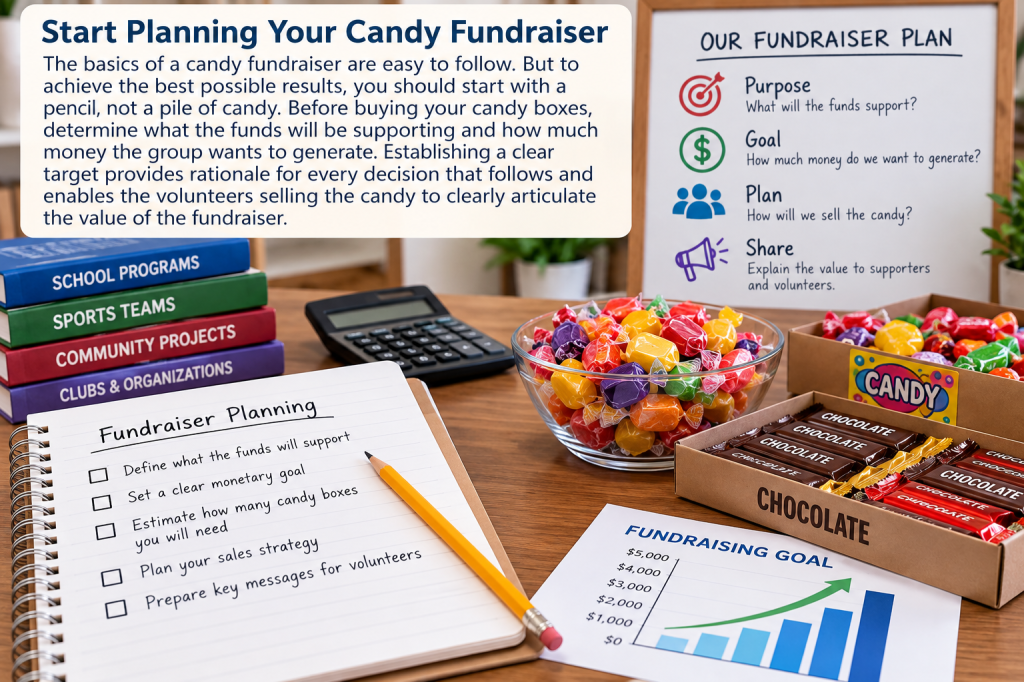
The basics of a candy fundraiser are easy to follow. But to achieve the best possible results, you should start with a pencil, not a pile of candy. Before buying your candy boxes, determine what the funds will be supporting and how much money the group wants to generate. Establishing a clear target provides rationale for every decision that follows and enables the volunteers selling the candy to clearly articulate the value of the fundraiser.
Begin by calculating the real cost per completed candy box. Add up all of the costs associated with preparing the candy boxes (candy, cartons, labels, liners, cards, etc.). Then subtract this total from the final cost at which a donor will purchase the candy boxes. What remains is the estimated profit per unit sold. Finally, divide the projected fundraising goal by this estimated profit per unit to determine how many units you will need to sell.
Create just one prototype before making a large quantity of candy boxes. Allow several adults to hold and inspect the box, and ask them to open it and read the message inside. A quick prototype review could reveal issues with the candy box’s construction (loose top), labeling (too difficult to read) or pricing (confusing). Additionally, a prototype review will provide a visual reference point for volunteers when they begin packaging items.
Select candy options that are easy to understand. For example, one candy option could be a simple mixture of candies; whereas another option could satisfy a specific identified need within the group. Make no claims regarding products that do not meet specific standards such as “Allergen-Free” unless you have confirmed through documentation that both the product and production environment comply with established standards. Provide donors with information on ingredients and potential allergens present in each item being sold. Also research applicable local health department, school district or events regulations prior to conducting any sales.
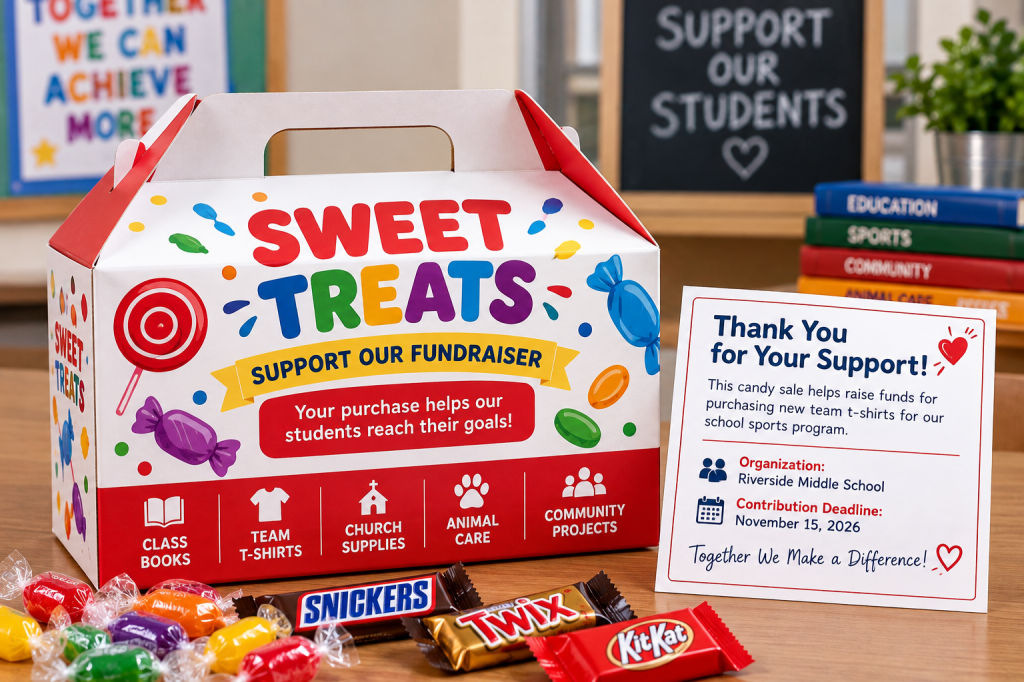
The wording on the outside of the candy boxes should clearly convey the purpose of the fundraiser. Explain to the buyer where their contribution will benefit, i.e., purchasing team t-shirts, class books, church supplies, animal care or other identified needs. A small insert card can briefly state the objective of the sale, identify the organization sponsoring the event and list the date by which contributions must be received. Donors should not have to wonder where their donation will be utilized.
Keeping track of sales is essential to ensure that a well-intentioned community-based fundraiser does not degenerate into a financial enigma. Assign a number to each shipment of candy boxes, document receipt of each shipment and keep track of returns. Store donations in a single location designated as secure. Provide receipts upon request and designate an adult to assist children during sales. Conduct a brief daily inventory review to prevent losses due to missing shipments while memories remain fresh.

