The Simple Box That Turns Every Treat Into an Experience

Candy boxes aren’t just little containers you grab at the last minute—they’re the first impression, the stage, and the silent storyteller of every sweet treat your customers enjoy. When you choose the right candy boxes, you’re not just protecting chocolate truffles or gummy clusters; you’re creating a moment. A moment where someone lifts the lid and instantly feels like the treat inside is worth savoring. That experience starts long before the first bite and long before your product ever reaches the hands of your customers. It starts with packaging that looks polished, feels sturdy, and communicates that care was part of the process from the beginning.
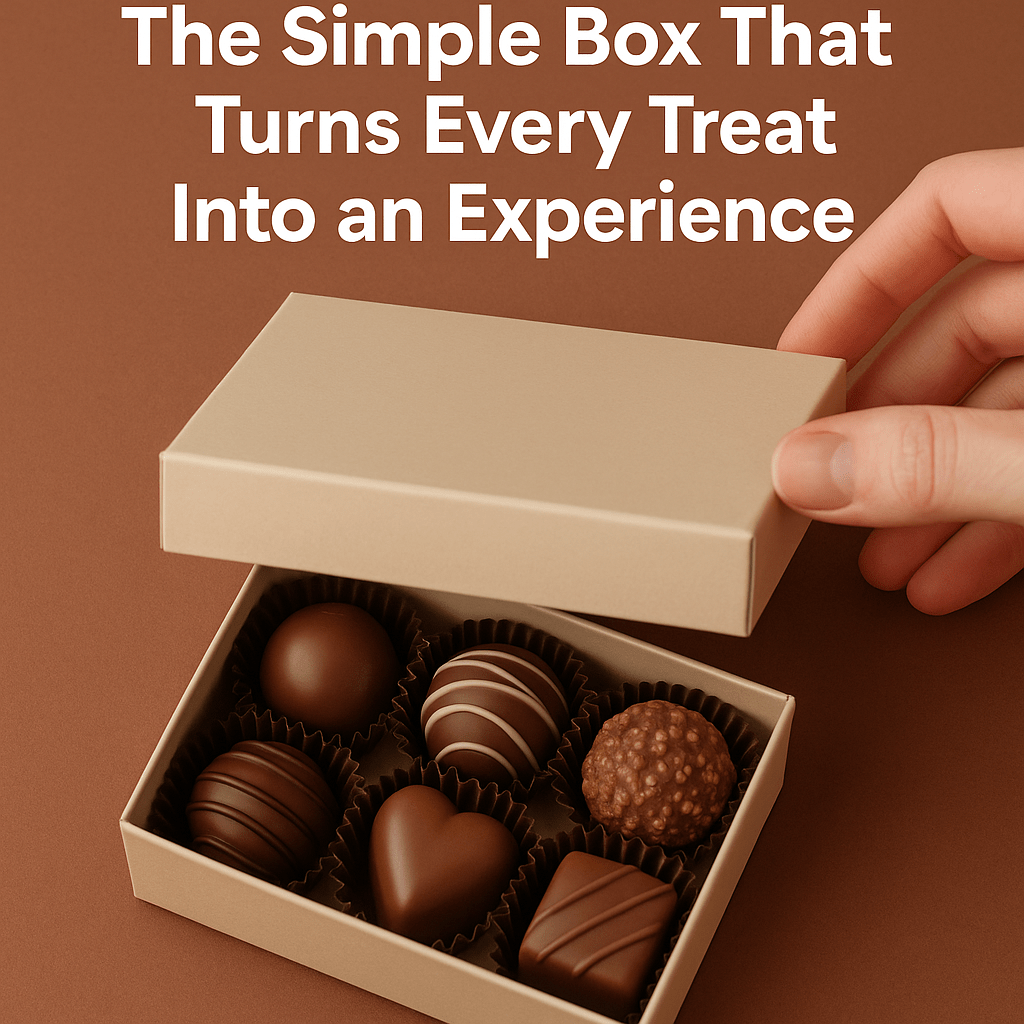
The demand for high-quality candy boxes isn’t going anywhere. In fact, small bakeries, home-based candy makers, boutique chocolate shops, and corporate gifting programs rely on packaging that feels premium without adding unnecessary cost. The right box has the power to elevate your product without changing a single ingredient inside it. That’s why choosing candy boxes made from durable materials matters. A flimsy box weakens the brand, while a well-constructed one signals that what’s inside is worth protecting. Customers feel the difference the moment they hold it.

Businesses often underestimate how much packaging influences buying behavior. A well-designed candy box makes your treats look more gift-ready, more professional, and more worth the price. It’s one of the easiest ways to position your product as high-value without increasing your production budget. People aren’t just buying chocolate—they’re buying presentations. They’re buying the feeling that what they’re gifting or enjoying came from a brand that takes pride in the details. When your boxes reflect that pride, your product stands out in a crowded market.

Candy boxes are also an opportunity to strengthen consistency across your brand. Whether you’re shipping hundreds of units or selling small-batch items at a local market, having uniform packaging helps establish recognition and trust. A sturdy box with clean lines and a smooth finish creates a polished, professional look every time. Customers return to brands that feel reliable, and packaging plays a major role in creating that perception long before a single review is written.

Another advantage of quality candy boxes is their versatility. They aren’t limited to chocolate-covered almonds or caramel squares. These boxes work beautifully for fudge, macarons, handmade mints, brittle clusters, taffy assortments, and even high-end baked treats. Many businesses choose standardized boxes and then customize the internal presentation with inserts, tissue, stickers, or branded labels. This approach keeps costs low while still offering that elevated “boutique” feel customers love.

Sustainability also matters more than ever. Eco-conscious shoppers value packaging that’s recyclable and responsibly made. Choosing candy boxes crafted from recyclable materials sends a message: you care not only about the product, but also about the impact it makes after it’s enjoyed. Without leaning into trends or loud messaging, it simply shows that your business values responsible choices. Many customers appreciate that more than they ever say out loud—and it becomes another reason they choose your brand again.
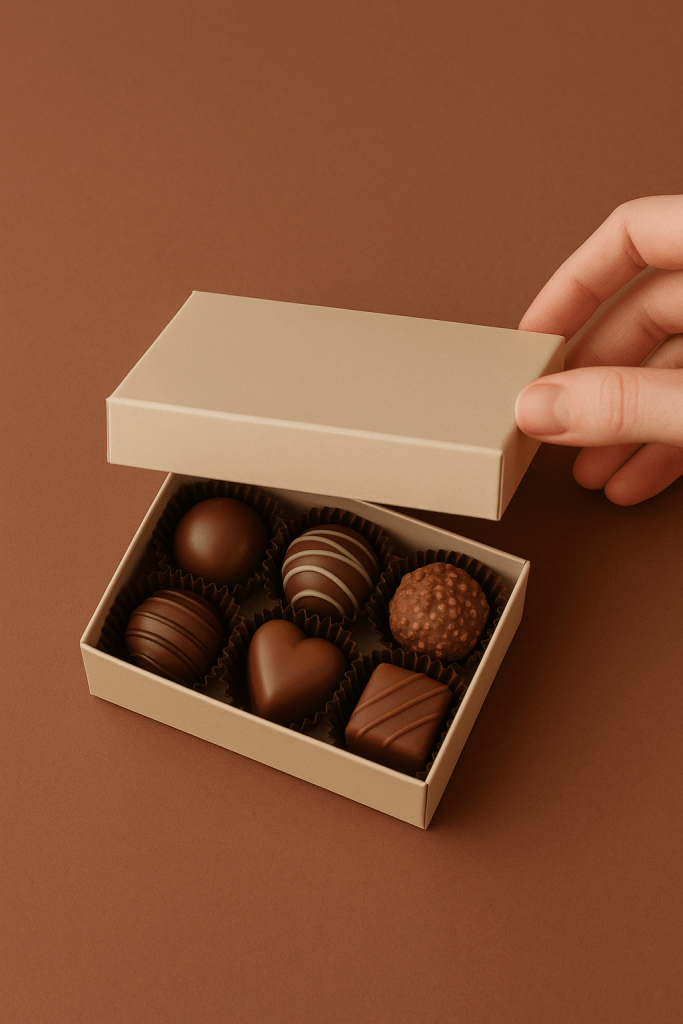
When your candy boxes check all the right boxes—strength, appearance, consistency, and eco-friendly materials—you position your business ahead of others who overlook how much packaging influences success. Your product deserves a box that enhances the experience, strengthens your brand, and keeps customers coming back. A strong candy box isn’t just packaging. It’s presentation, protection, and professionalism wrapped into one dependable solution.
Keeping Candy Fresh For Longer

Probably the number one question people have is how candy boxes contribute to keeping your candy fresh. Of course, the candy recipe is critical, but so is the packaging process. Protecting the candy from the point at which you’ve completed making it through to the moment the person takes their very first bite is the responsibility of both the candy maker (and) the packaging. If your candy is not properly packaged, the quality of the candy can rapidly decline. When chocolate candies are improperly packaged, they will scratch; candies with a coating will chip; and soft candies will develop irregular shapes due to excessive movement. A well-sized candy box will assist in minimizing this type of movement while being stored and/or shipped.

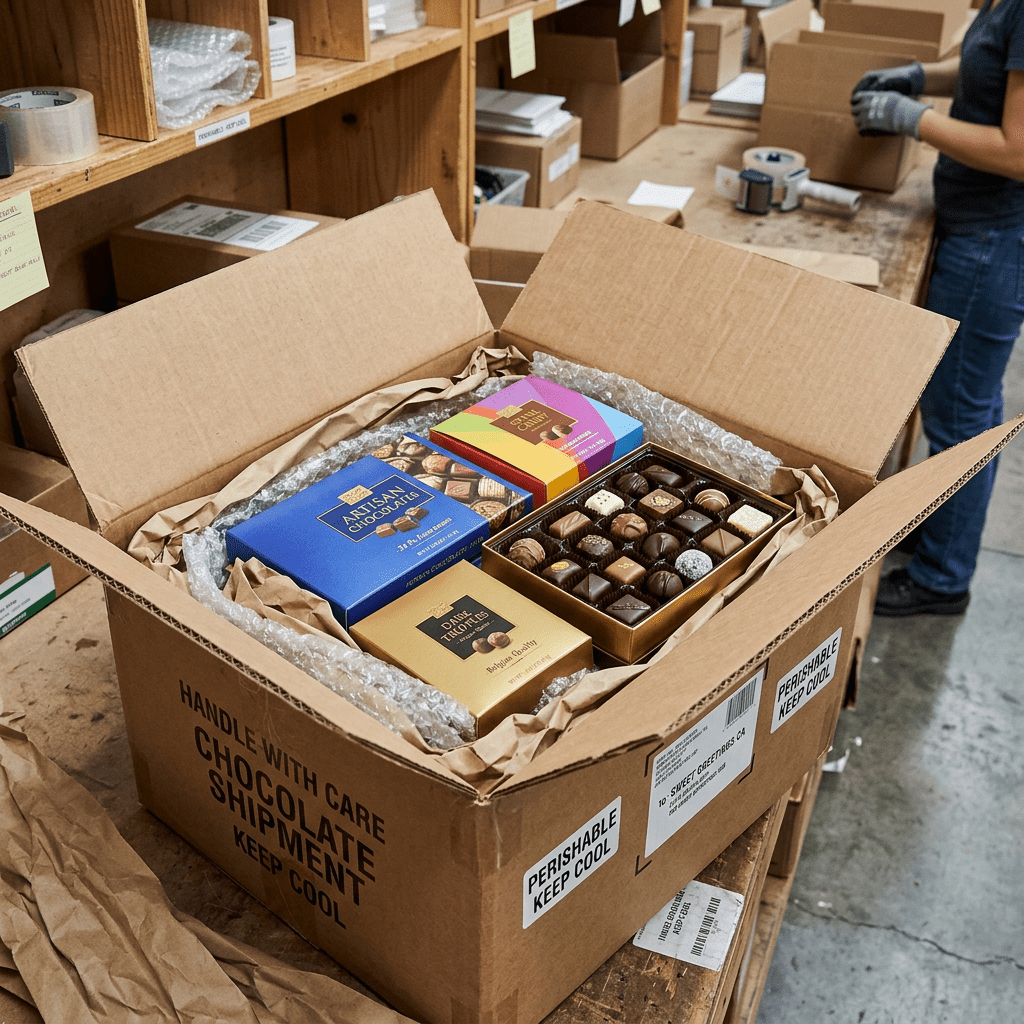
Open cardboard box with assorted chocolates packed inside and handled with care labels
A box filled with assorted chocolates being packed securely for shipment

Protecting the candy from all the possible damage associated with ordinary handling is another advantage of having an excellent candy box. Even before your candy arrives at the customer’s home, it has been moved multiple times. Your product might be stored in a warehouse; placed upon delivery vehicles; displayed on retail display shelving; or wrapped for gifting purposes. Each of these steps provides yet another opportunity for the candy to become displaced/bumped/shifted. Having a solid, high-quality candy box reduces this possibility and maintains the integrity of the product.

In addition to providing protection and maintaining quality, many candy manufacturers give considerable thought to the presentation aspect of their products. Customers purchase candy to provide as birthday gifts; holiday gifts; wedding gifts; gifts at baby showers; and thank-you gifts. The box in which your candy is sold becomes an integral component of the gift itself. An aesthetically pleasing/cleanly designed box generates excitement prior to opening. A beautifully designed box can add significantly to the perceived value of your gift.

Customers often inquire whether purchasing a larger candy box results in a higher-quality box. However, in most instances, it does not. There is extra room inside a larger candy box allowing candies to shift against one another while being shipped. Shifting candies can result in chocolate cracking; breakage of candies; or messiness resulting from coatings. Choosing a box that closely fits your candies ensures that each individual piece of candy remains neat and ready to consume.

An additional factor to consider is storage. Candy boxes that are designed to stack allow retailers/warehouses to easily organize their inventories. Inventory counts are more accurate; inventory retrieval is easier; and damages related to inventory storage are reduced. In addition, organized storage areas enable employees to complete their tasks more efficiently.

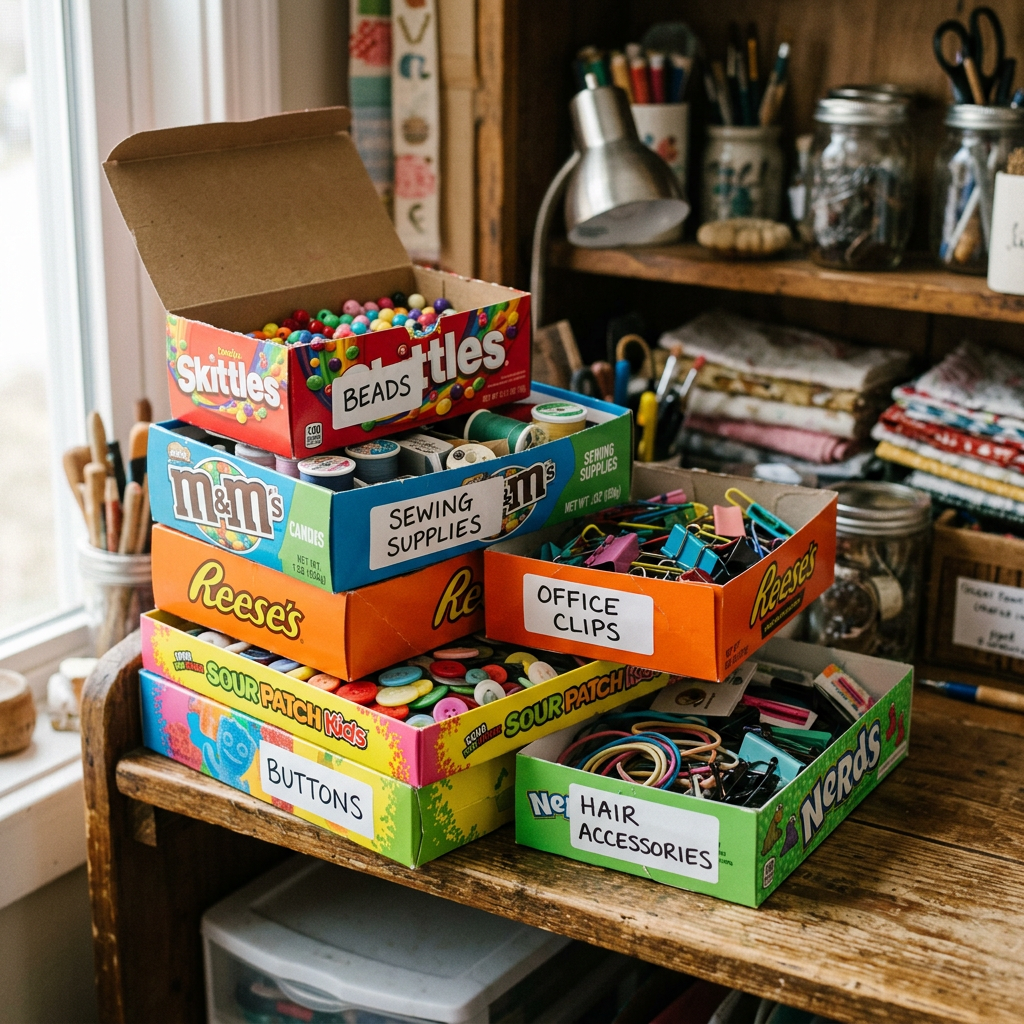
Candy boxes labeled and filled with beads, sewing supplies, office clips, buttons, and hair accessories.
Candy boxes repurposed as colorful storage containers for craft supplies.

A final note regarding candy boxes: Many paper-based candy boxes can be recycled after use (dependent upon your local recycling program). Some customers will even reuse sturdy candy boxes to store small items such as craft supplies or mementos, long after they have consumed the candy contained within. Providing an alternate function for packaging materials contributes toward reducing excess waste.

Ultimately, selecting the correct candy box serves far more than merely holding sweet treats. It protects fragile treats; enhances their visual appeal; promotes more efficient inventory management; and ultimately produces an unforgettable experience for your customers. By investing time in finding the perfect box, each piece of candy will continue to look as delicious as the day you lovingly prepared them.

The Size Mistake Adds Cost

Candy sellers frequently devote considerable amounts of time to checking shipping cost. When comparing various delivery services, they check prices and try to save money. Shipping box size is an area that is often ignored.

An initial thought is that a box is simply a box. Once the candy has been placed inside the box, the job appears complete. However, a shipping box’s size will impact considerably more than most would think.

Whether box size actually matters is something that many business owners want to know. The short and sweet answer is “yes.”

When a candy box is significantly larger than its contents, this creates extra space. This unused space generally requires additional packaging materials (packing paper, air pillows, etc.) to fill. Packaging materials can provide protection but add time to the packing process.

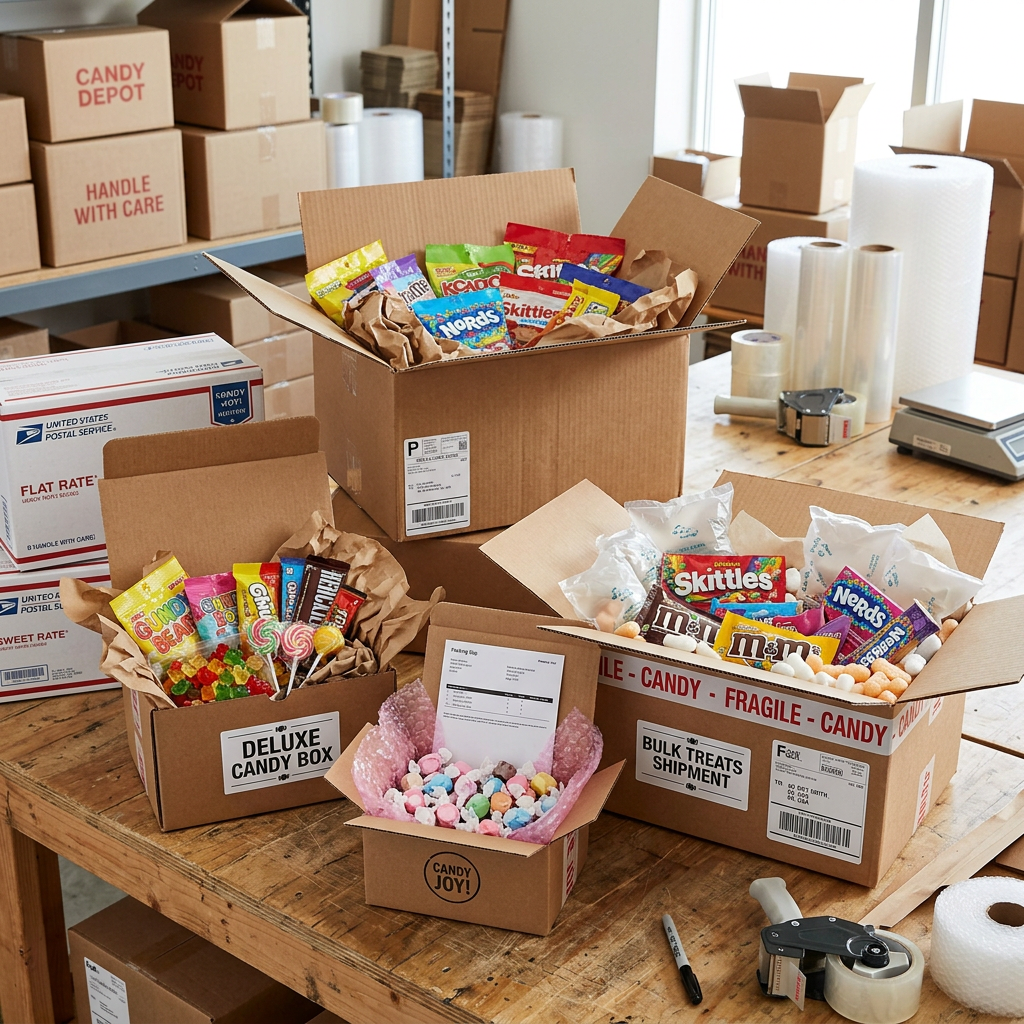
Open cardboard boxes filled with assorted candy and shipping materials on a wooden table
Four different candy boxes filled with various sweets are prepared on a wooden table for shipment.

If we picture a busy business owner, who packs fifty or one hundred packages per day. And, the majority need a little added filler. Those little added seconds quickly accumulate over weeks and months.

When using a candy box that is correctly sized, it may increase efficiency in packing due to less unused space to manage. The item should fit securely within the package; the package will feel safer; and the packer will have a smoother working environment.

The next general question is does box size affect shipping costs. Yes, it can.

Carriers consider box measurements when computing shipping costs. Even though items inside might be light weight, a larger box may consume a portion of a truck space. Selecting a box that best fits the item, may prevent spending on unwanted space.

Lastly, the customer experience is impacted by box size. Can anyone remember receiving a large shipment with a very small product inside? Most people do recognize when a shipment seems larger than the item(s) received.

A box that best fits the merchandise ordered, may seem more organized and professional. This may enhance how your customer perceives your product when opening their package.

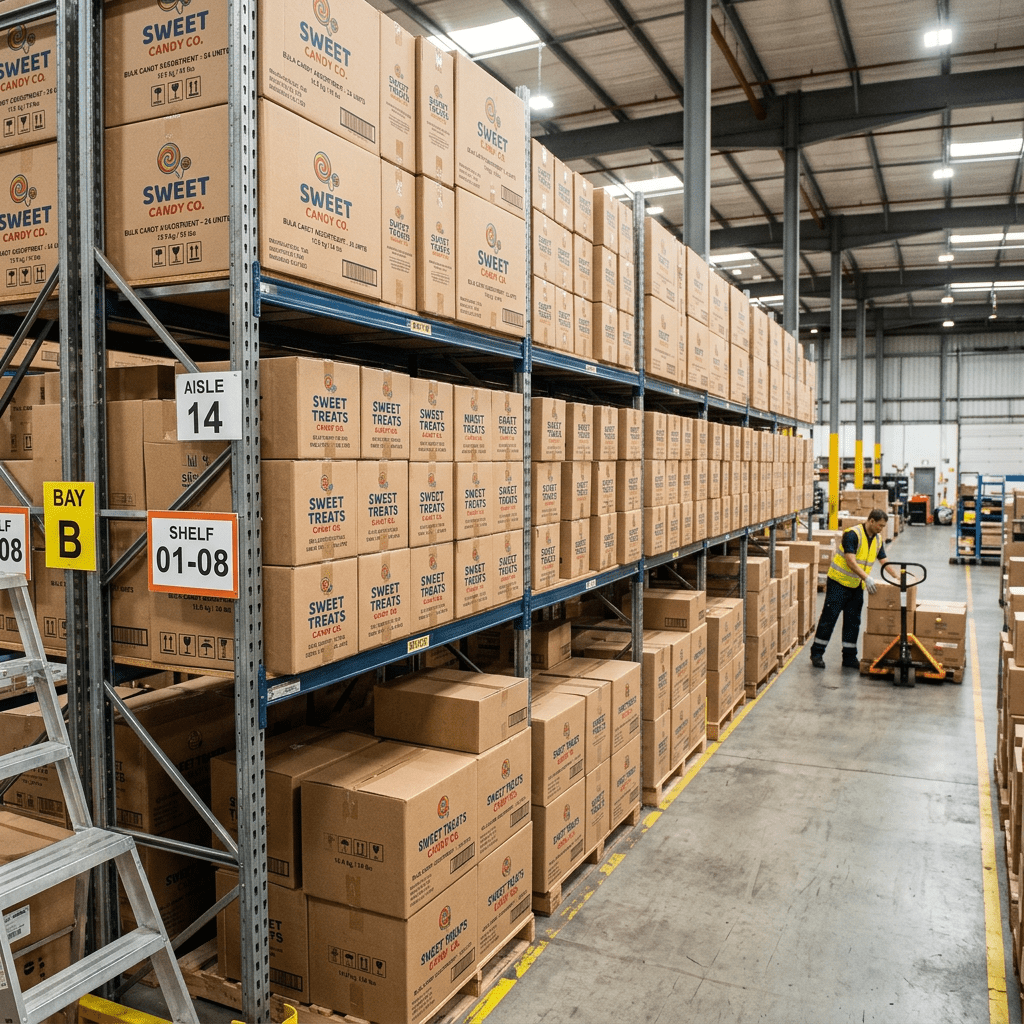
Warehouse aisle filled with stacked boxes labeled Sweet Treats by Sweet Candy Co., worker using pallet jack
A worker organizes boxes of Sweet Candy Co. treats in a spacious warehouse aisle.

Box storage is also critical. Any company utilizing a number of different box sizes may find difficulty keeping the shipping department organized. Shelves get crowded with supplies that cannot easily be located by employees. Employees may spend some extra time locating the correct box to utilize.

Utilizing a reduced quantity of selected candy box sizes can assist companies in creating a faster and efficient work place. Supplies can be stocked and counted more efficiently; supplies can be accessed easier; and employees can find the required supplies quicker.

In addition to choosing the right candy box size for packing purposes, many businesses also select sizes based on minimizing waste. With minimal amount of packaging material and supplies utilized during packing, it is advantageous for both the seller and buyer.

Choosing the right candy box size isn’t just about putting candy in a box. It is about creating packing easier, control costs, organize, and ensure products arrive safely. The decision made while packing small candies can result in great results, and finding the right size is one of the easiest things you could improve in your business.

Unboxing Ergonomics to Make Physical Ease Easy! 

One challenge that some people have with their items is that the customers complain about poorly-designed packaging. It might seem like a good idea at first, but then when the customer tries to open it, they start to have a wrap rage getting it undone.

Many as well might need to get scissors and other sharp objects to open it. This creates further issues and strains because they’ll potentially hurt themselves doing this.

You don’t want that, right? You can change this problem and reduce its occurrence with ergonomic packaging that’s designed to be easy to use, and also effective for all of your packaging needs. 

The Design Principles for Handling Easily 

The major thing is the design of the item. You want to make it very easy for your customers to handle. What that doesn’t mean is make it so user-unfriendly that they get upset. 

Perforated edges they can tear along is one great example of this. you, as a customer, are able to create and tear off many of the edges, and then get the item off. It’s easy and simple. 

Pull tabs are another. If you have a mechanism to unlock the packaging like this, you can add that in. the other benefit to this one, like perforated edges, it also makes it tamper-evident for people to look at.

Finally, watch how much adhesive you use.   Adhesive is needed, sure, but using too much will impact the overall effects of the packaging. Being able to use minimal adhesive is important, and to ensure that there is minimal adhesive, try to make it so that it closes, but doesn’t bog down the packaging

Applications of Ergonomic Packaging 

So who uses this type of packaging? A lot of people do actually! Think of pill bottles that have a pulling mechanism or easy-to-twist off caps? This is one example. 

A bag that has perforated edges for you to open is another example. Tabs where you’re supposed to grab them and tear them off are used as well in cosmetic packaging. 

Senior-friendly products almost always have these, since due to arthritis and other conditions, many seniors struggle with basic activities. 

Why Should Brands Do this? 

Other than looking accessible, it also improves customer satisfaction. The last thing that you want is for a customer to complain that your packaging is too hard for them to open up. it just looks better, and if they can get it open, there’s a high chance that they will tell others about it, since they’re happy with the results. 

The other reason is more of an ecofriendly means.   If you have less packaging waste, it reduces your carbon footprint, and makes you look better. Reducing such packaging waste is good for everyone on all fronts, so it’s recommended that you do this. 

The Future of Packaging 

These days, we’ll probably see more and more brands adopt the ergonomic means for their packaging. 

However, we will also see more technology leveraged with this. Some brands have already added a QR code for instructions if there is trouble. With more seniors understanding technology, it does make sense.

The other addition is AR. AR for guided unboxing experiences helps to connect the customers more with the product at hand. It improves the general feeling on the product, and overall customer benefit.

So yes, your packaging ergonomics matter. There’s a lot of great ways for you to get started with this, and here, we gave you a taste of how you can use packaging that’s user-friendly, and easy for you to do!