When you purchase candy boxes in preparation for a social function (i.e. A party), your first decision is to “guess” how many candy boxes you need. Inevitably, this results in either having leftover candy containers after the party ends, or running short of candy containers before everyone receives their treat. A more thoughtful approach would consider who will be receiving each candy container, how treats will be distributed to the guests attending, and whether your guest list will increase or decrease prior to the event.
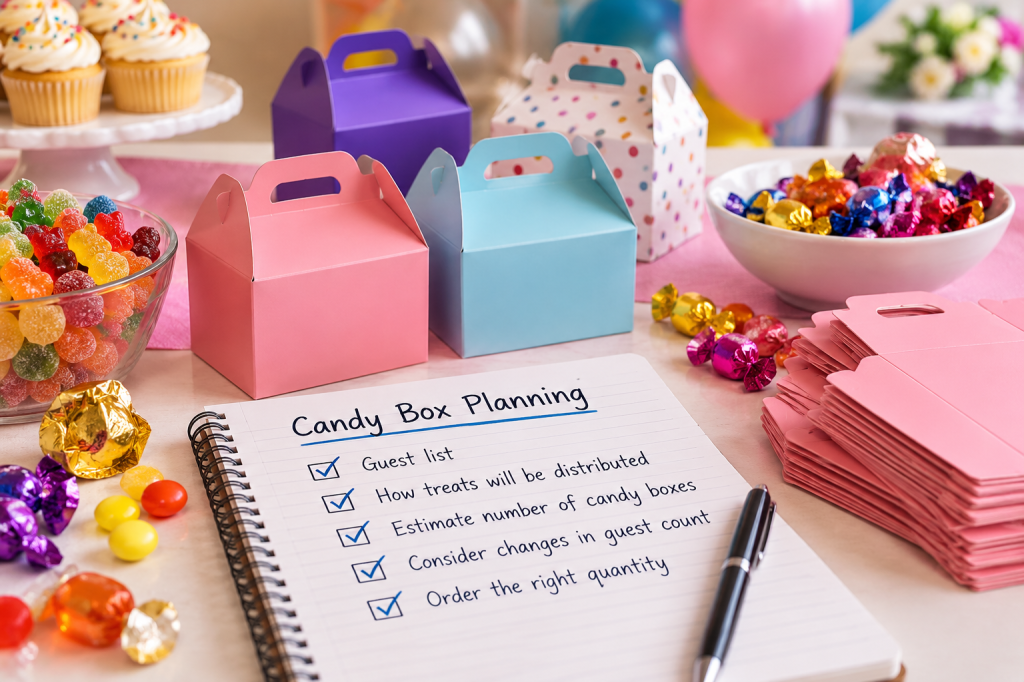
Your first consideration should always be your most recent estimate of the number of guests attending the party. Regardless of whether you originally had 80 guests rsvp and confirm attendance, you would begin using 80 as your primary number. Typically for events such as weddings, birthdays, bridal showers, or school functions; it is easiest to simply provide One candy box per attendee. However, children also qualify as attendees if they will also receive the same type of treat.
How guests obtain treats will affect how many boxes are ultimately required. Candy boxes distributed directly to assigned seating allow for greater control over distribution since each chair receives One. Conversely, candy boxes left unattended near doors or tables can easily disappear. It is possible for One guest to take an additional box for a family member at home while a child unknowingly grabs an additional box.
To account for these possibilities, plan for some additional boxes beyond your original number. Traditionally adding five to ten extra boxes for every hundred guests provides adequate coverage when your guest list appears firm. Events with uncertain guest lists may require slightly more.
The objective is not to acquire a massive cache of spare boxes, but rather to ensure there is sufficient space for unexpected guests, broken/damaged boxes, or forgotten helpers.
In instances where couples can share One large box of candies, both parties involved must clearly agree upon this arrangement. Plan ahead by counting households/pairs rather than individuals and ensuring that single guests receive a box. Family boxes can be effective at gatherings where families/individuals take the treats home together. However, family boxes could create confusion at very large events unless names or table numbers are provided.
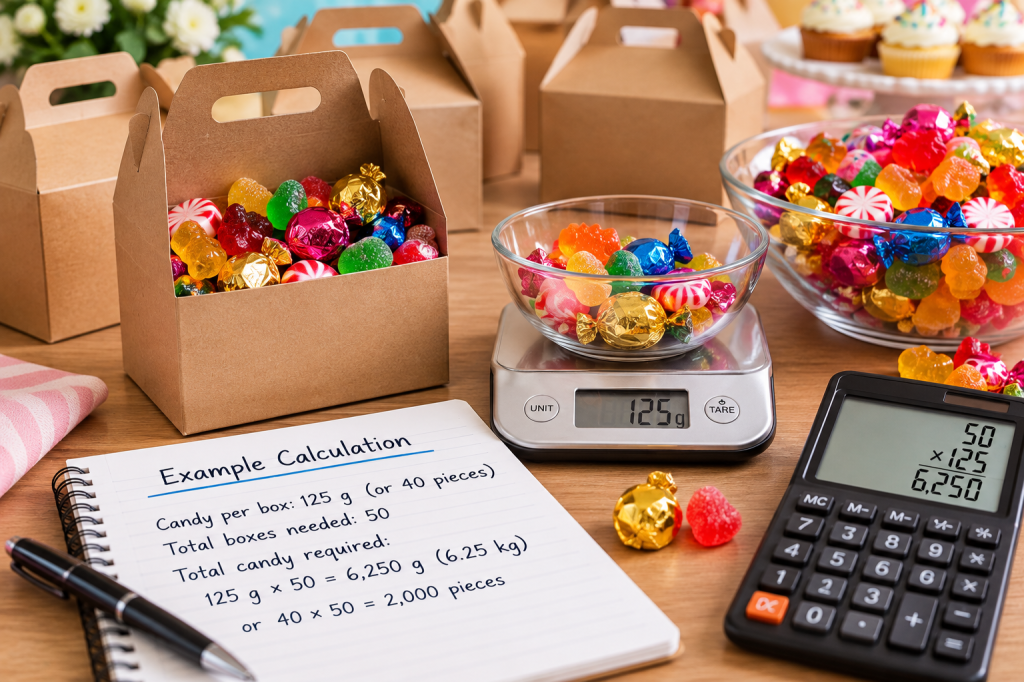
Planning for the quantity of candy in addition to planning for the number of boxes is essential. Before placing orders for all of the sweet treats, fill One example box and determine how much candy fills the box. Then weigh/count the candy and multiply that amount by the overall number of boxes ordered. This method protects against purchasing an abundance of cartons, but an insufficient amount of candy. Purchasing too small packages online is a common mistake made when the size of the package looks significantly smaller than expected.
Workers/speakers/drivers and others similar individuals who may not be listed as guests deserve recognition. Providing a thank-you box as a gesture of appreciation for their contributions is a thoughtful gesture. Consider setting those boxes aside before the event begins to prevent them from being removed from the main stockpile. Any remaining extra boxes can be reserved for future events or donated to a nearby community organization.
Compile the quantities of all categories onto One planning form: confirmed guests, shared boxes, last-minute additions, helpers, and excess items. Once all quantities are accounted for, compile the totals into One figure and submit the order. A well-planned estimate will save you money, minimize waste and clutter, and result in each individual leaving with the desired item.

