Making Your Candy Safe & Ready to Eat

Many people purchase candy as gifts during birthday celebrations, holiday gatherings, wedding events, and many other occasions. Before the candies arrive to the recipient’s hands they must be packaged properly. Candy packaging provides an effective method of protecting candies as well as maintaining their organization and appearance.
Some reasons why proper candy packaging will assist you in packaging candies include:

Prevent Candy Damage

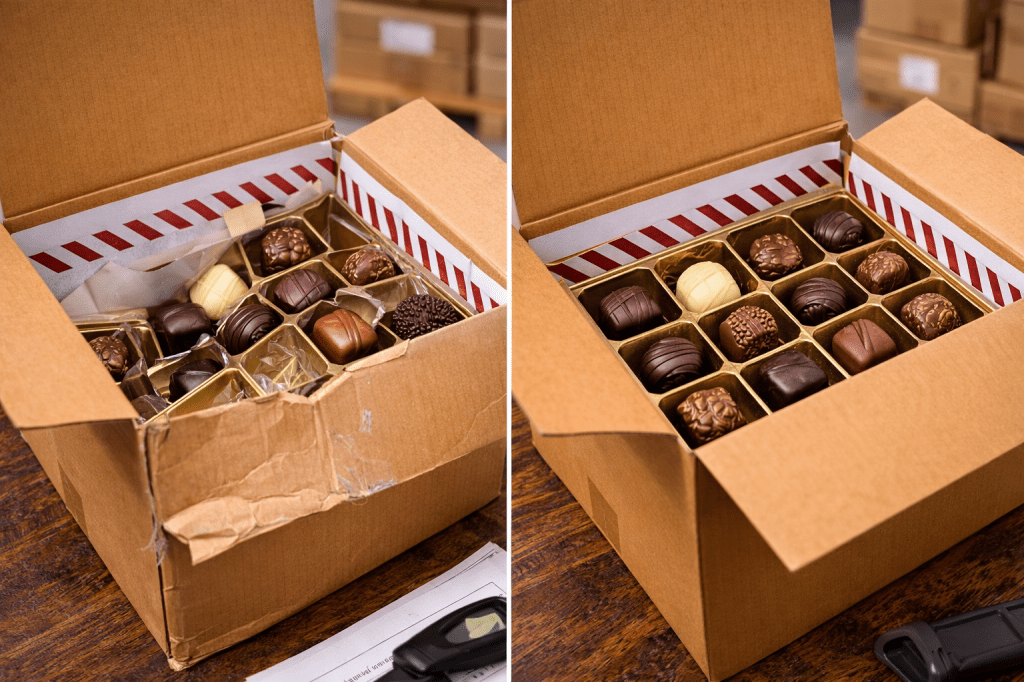
Many types of candies can be damaged far easier than most would believe. Chocolate can develop cracks. Soft candies can become crushed. The decorations on some candies can fall off because the movement of the candies causes them to dislodge.

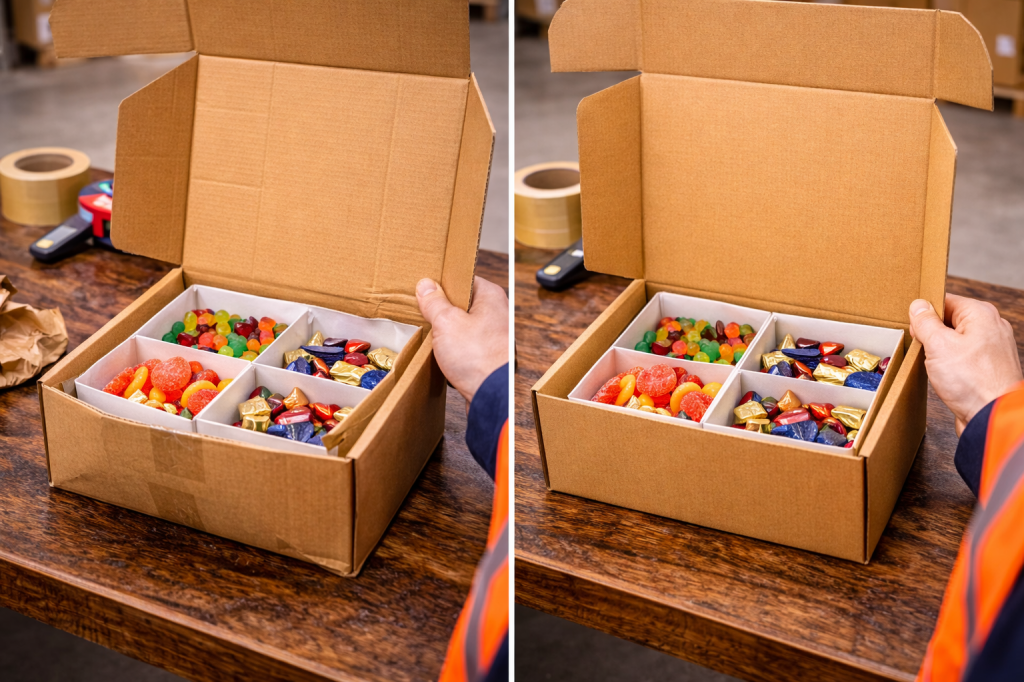
An ideal candy box protects the candy by providing a barrier between the candy and anything else that could cause harm. An additional layer of protection can be provided using candy cups or trays within the box. This type of container allows each item of candy to remain in a fixed position.

Maintain Separate Pieces of Candy

How often does a customer open a chocolate box to discover multiple pieces of chocolate stuck together?

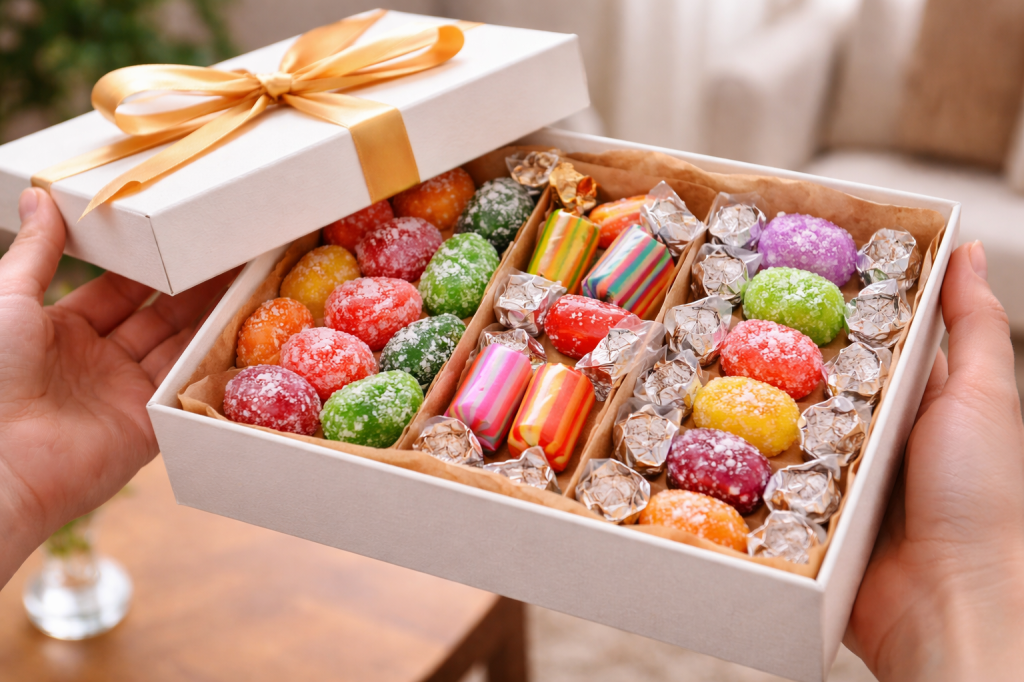
Often this occurs when there is too much area available for the chocolate to move around in the box. Using a box which contains a tray or a divider will maintain separate areas for individual pieces of candy. This is especially beneficial when selling chocolates, fudge, truffles, caramels or other small treats.

In addition to maintaining separate pieces of candy, this type of container also maintains a neat appearance when a customer opens the box.

Select A Proper Size for Your Box
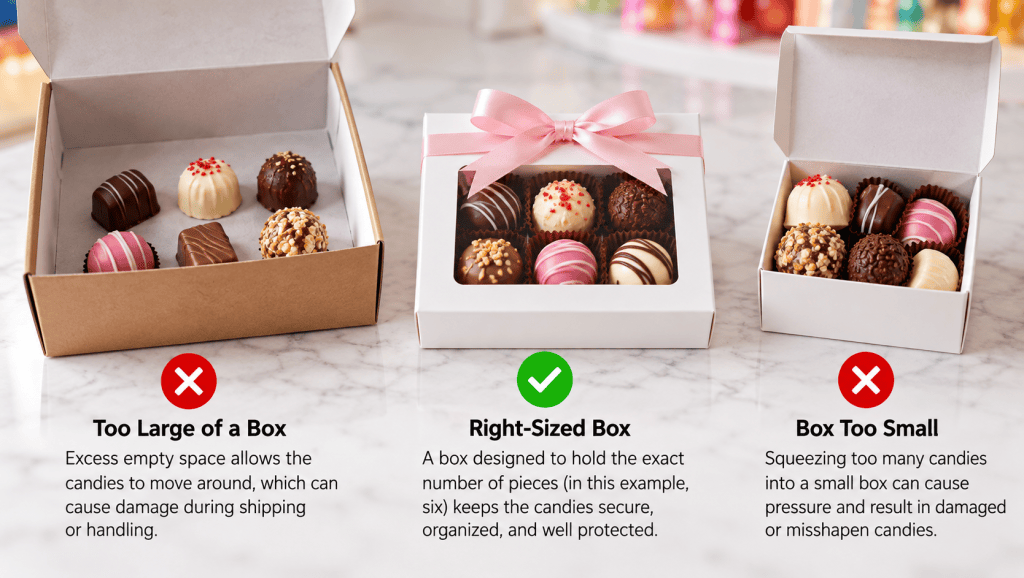
Consider how many pieces of candy your typical customer purchases per sale. If your average customer typically buys six pieces, then you should select a box designed to hold six pieces (not twenty). Too large of an empty space will provide the candies with too much room to move. Conversely, too many candies squeezed into a small space will likely result in damage to the candies.

Your objective is to locate a box size which supplies your candies with sufficient space so that they are able to freely float; however, not so much space that they are free to move around.

Provide Consideration for The Consumer

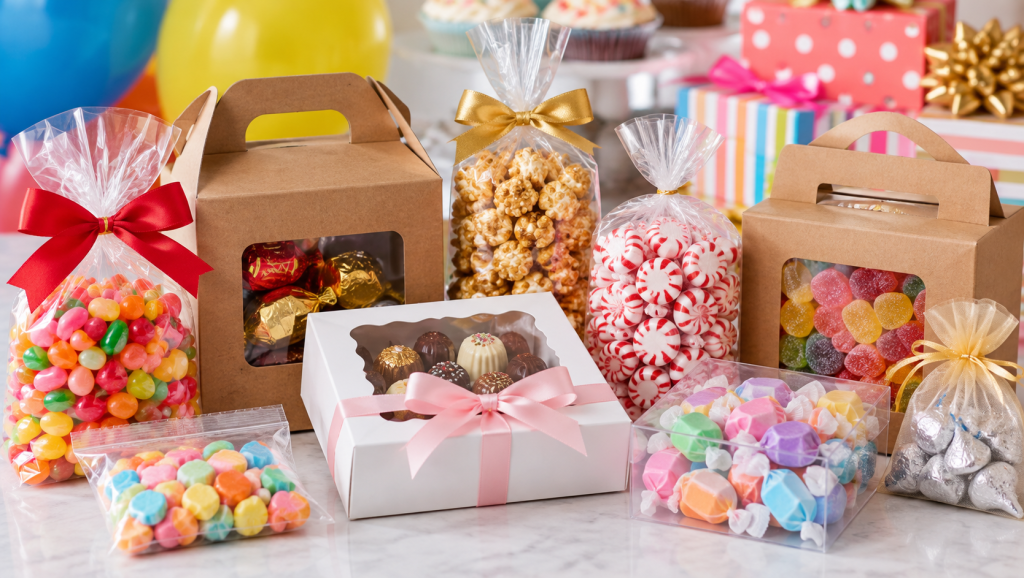
Packaging can also aid in allowing consumers to gift your candies. Many times a consumer is purchasing your candy for a teacher, coworker, family member or friend. As such, a nice box will reduce the likelihood that they will require additional wrapping materials.

Reduce Effort Required by Consumers

Finishing The Job Correctly

You took the time required to either produce the candies yourself or select them. Now all you have left to complete is package the candies and deliver them to the customer. Candy boxes aid in protecting your candies, organize your candies and present them neatly.
Why your candy looks cheap

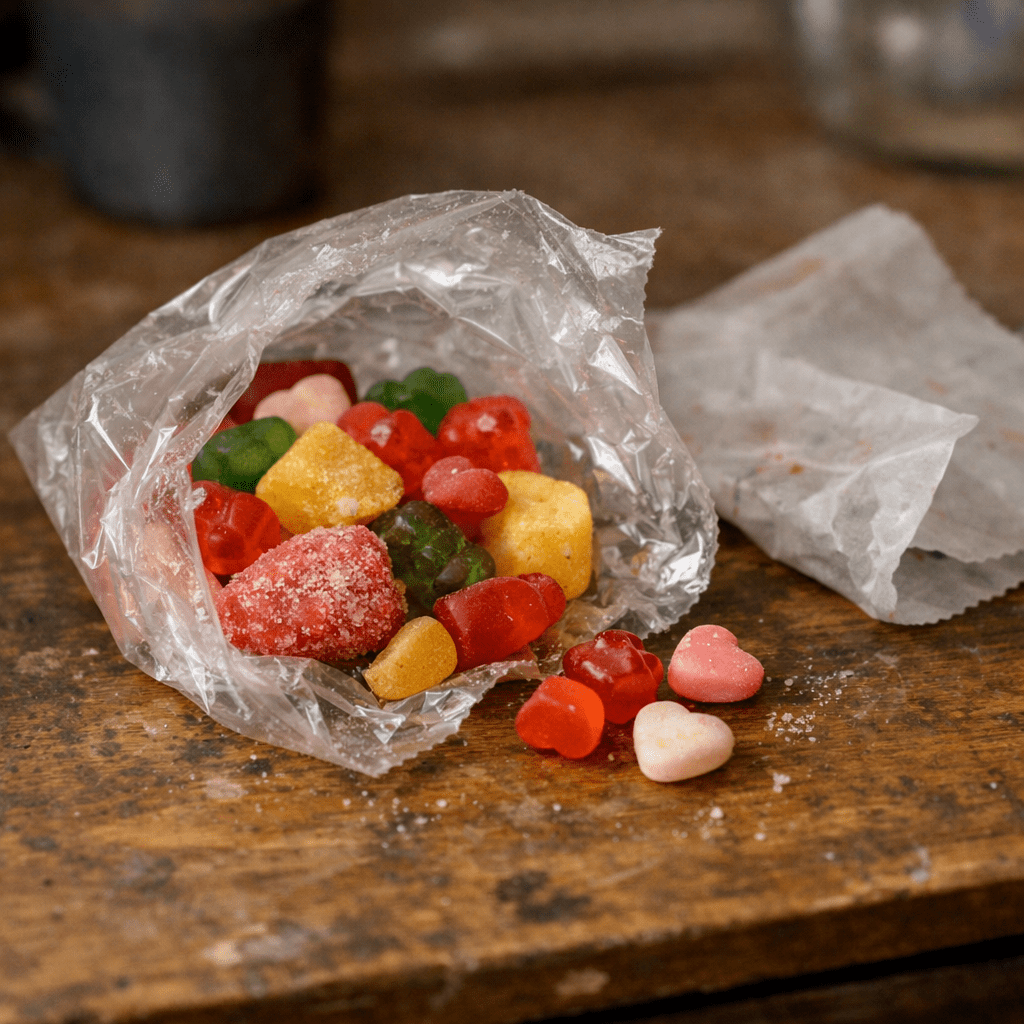
Have you ever given someone candy and felt like it did not land the way you hoped? The taste might be great, but something feels off. The candy is in a wrinkled bag, pieces are uneven, and it just does not feel like a gift. This is something many people notice, even if they do not say it out loud.

A common question people have is why some candy feels special while other candy feels ordinary. The difference is often not the candy itself. It is how it is presented. The way something looks before you taste it shapes the whole experience.

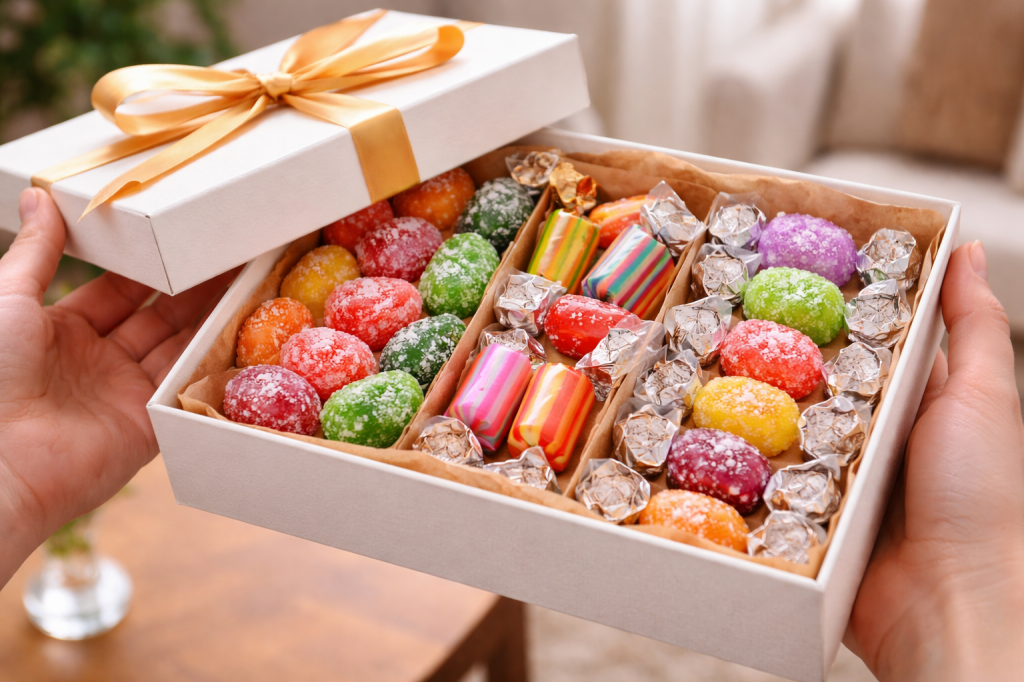
Candy boxes change that moment right away. Instead of handing over a loose bag, you offer something that has shape and structure. When someone lifts the lid, they see the candy arranged in a clean and simple way. It creates a pause, a small moment where the person takes it in before reaching for a piece.

Think about opening a box and seeing rows of colorful treats, each one easy to grab, each one looking like it belongs there. It feels more thoughtful, even if the candy inside is something simple you could find anywhere. The box helps tell a different story.

People often ask how to make small gifts feel more meaningful without spending more money. One easy answer is to focus on presentation. A box turns candy into something that feels planned and cared for. It shows that you took an extra step, even if that step only took a few seconds.

Candy boxes also help keep everything looking clean. When candy is loose, it can collect dust, pick up marks, or lose its shine. A box protects it from that. When you open it, the candy still looks bright and fresh, the way it did at the start.

Another benefit is how easy it becomes to organize different kinds of treats. Instead of mixing everything together, you can place items in a way that makes sense. This is helpful for parties, gift sets, or even small sales. People can see what they are choosing without digging through a pile.

There is also a feeling of confidence that comes with using a box. You do not have to worry about things spilling or shifting. You can carry it, set it down, and hand it over without second guessing how it looks. That peace of mind makes the whole process easier.

For anyone who wants to make a better impression, this matters. People remember how something made them feel. When candy looks neat and well placed, it feels like more than just a snack. It feels like a small experience.

In the end, candy boxes do more than hold sweets. They help turn simple candy into something that feels thoughtful, clean, and worth sharing. When the first look creates a good feeling, everything that follows becomes even better.

Eliminate guesswork when buying candy boxes

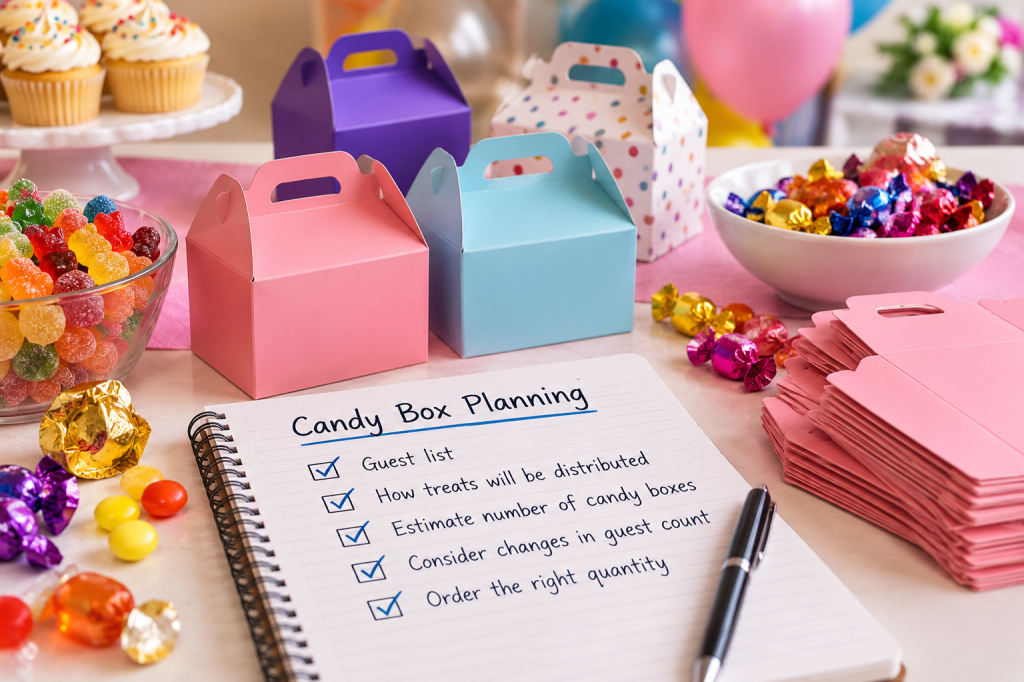
When you purchase candy boxes in preparation for a social function (i.e. A party), your first decision is to “guess” how many candy boxes you need. Inevitably, this results in either having leftover candy containers after the party ends, or running short of candy containers before everyone receives their treat. A more thoughtful approach would consider who will be receiving each candy container, how treats will be distributed to the guests attending, and whether your guest list will increase or decrease prior to the event.

Your first consideration should always be your most recent estimate of the number of guests attending the party. Regardless of whether you originally had 80 guests rsvp and confirm attendance, you would begin using 80 as your primary number. Typically for events such as weddings, birthdays, bridal showers, or school functions; it is easiest to simply provide One candy box per attendee. However, children also qualify as attendees if they will also receive the same type of treat.

How guests obtain treats will affect how many boxes are ultimately required. Candy boxes distributed directly to assigned seating allow for greater control over distribution since each chair receives One. Conversely, candy boxes left unattended near doors or tables can easily disappear. It is possible for One guest to take an additional box for a family member at home while a child unknowingly grabs an additional box.

To account for these possibilities, plan for some additional boxes beyond your original number. Traditionally adding five to ten extra boxes for every hundred guests provides adequate coverage when your guest list appears firm. Events with uncertain guest lists may require slightly more.

The objective is not to acquire a massive cache of spare boxes, but rather to ensure there is sufficient space for unexpected guests, broken/damaged boxes, or forgotten helpers.

In instances where couples can share One large box of candies, both parties involved must clearly agree upon this arrangement. Plan ahead by counting households/pairs rather than individuals and ensuring that single guests receive a box. Family boxes can be effective at gatherings where families/individuals take the treats home together. However, family boxes could create confusion at very large events unless names or table numbers are provided.

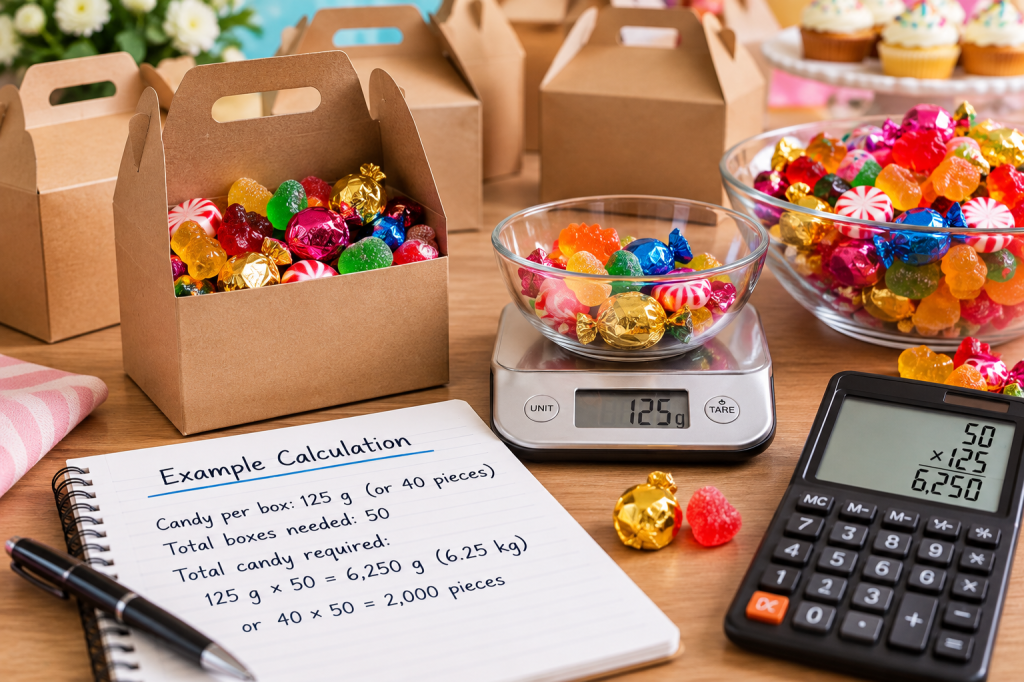
Planning for the quantity of candy in addition to planning for the number of boxes is essential. Before placing orders for all of the sweet treats, fill One example box and determine how much candy fills the box. Then weigh/count the candy and multiply that amount by the overall number of boxes ordered. This method protects against purchasing an abundance of cartons, but an insufficient amount of candy. Purchasing too small packages online is a common mistake made when the size of the package looks significantly smaller than expected.

Workers/speakers/drivers and others similar individuals who may not be listed as guests deserve recognition. Providing a thank-you box as a gesture of appreciation for their contributions is a thoughtful gesture. Consider setting those boxes aside before the event begins to prevent them from being removed from the main stockpile. Any remaining extra boxes can be reserved for future events or donated to a nearby community organization.

Compile the quantities of all categories onto One planning form: confirmed guests, shared boxes, last-minute additions, helpers, and excess items. Once all quantities are accounted for, compile the totals into One figure and submit the order. A well-planned estimate will save you money, minimize waste and clutter, and result in each individual leaving with the desired item.

Why candy loses its magic

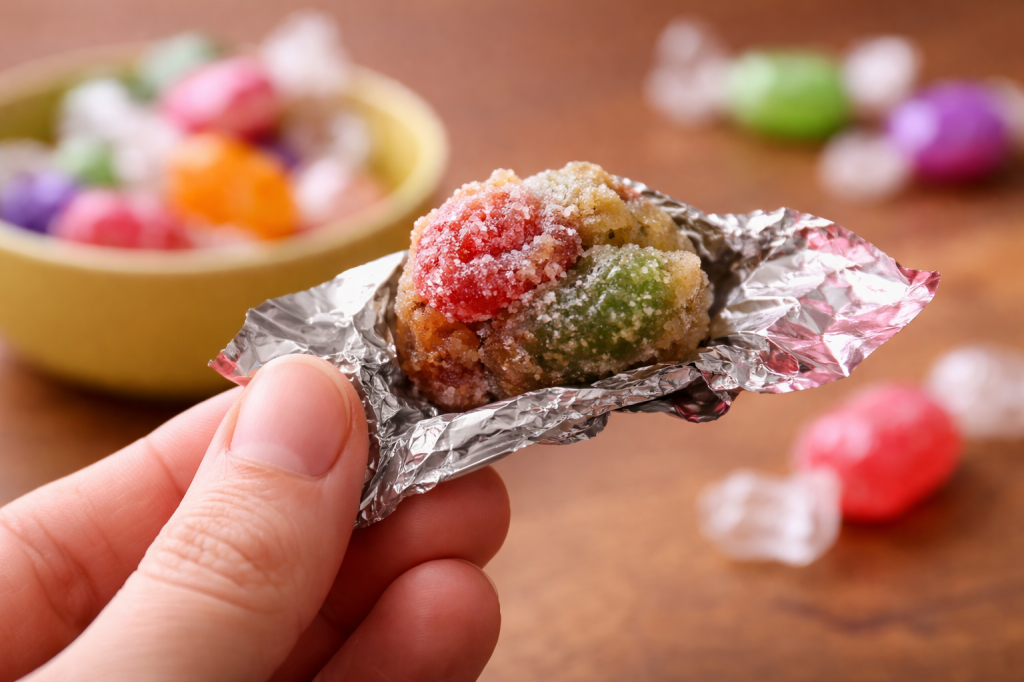
Have you ever saved a piece of candy for later, only to come back and find it does not taste the same? Maybe it feels dry, or the flavor seems dull, or it has turned into a sticky lump that is hard to enjoy. This happens more often than people think, and it can take the fun out of something that was meant to be a simple treat.

A common question people ask is why candy changes so quickly. The truth is that candy reacts to its surroundings. Air, heat, and even light can slowly affect how it looks and tastes. When candy is left in thin packaging or loose containers, it has little protection from these changes.

This is where candy boxes come in as a simple and helpful solution. Instead of leaving candy exposed, a box creates a more stable space around it. When you close the lid, it reduces how much air moves in and out. This helps the candy stay closer to how it felt the first time you opened it.

Think about opening a box a few days later and finding the candy still soft, still bright, and still full of flavor. That moment feels different. It feels like nothing was lost. The experience stays the same, and that is what most people want when they save something for later.

Another way candy boxes help is by keeping pieces from touching too much. When candy is packed tightly in a bag, it often sticks together, especially if it is warm. You may pull one piece out and find three more attached to it. In a box, there is more structure. The candy has space to sit without pressing into each other, which helps it keep its shape.

People also wonder how to make candy feel more like a gift without spending more money. The answer is often in the way it is presented. When candy is placed inside a neat box, it feels more thoughtful. Picture handing someone a small box that opens to reveal rows of treats, each one easy to pick up and enjoy. It creates a better moment, even if the candy is simple.

Candy boxes can also make a difference when you are planning events. Whether it is a birthday, a holiday, or a small gathering, having candy stored in boxes makes it easier to set things up. You can place them on tables, stack them neatly, and keep everything looking clean. There is no need to worry about spills or scattered pieces.

For those who care about reducing waste, candy boxes can also help in a small but meaningful way. When candy stays fresh longer, fewer pieces get thrown away. This means you enjoy more of what you bought, and less ends up in the trash.

In the end, candy boxes do more than just hold sweets. They help protect the taste, keep the shape, and make each moment feel just a little more special. When candy keeps its magic from the first bite to the last, it becomes something worth slowing down and enjoying.

After The Holidays, Packaging Tells the Truth

January is when reality sets in for candy businesses. The holidays are over, the rush has passed, and there is finally time to look back without the pressure of nonstop orders. This is usually when packaging problems become obvious. Candy may have sold well, but boxes often tell a different story once things slow down.

Candy boxes go through a lot more than people realize. They are packed quickly, stacked high, moved across warehouses, loaded into trucks, and handled by multiple people before reaching the customer. If a box is weak, it will show. Lids loosen, corners dent, and presentation suffers. January is when those issues can no longer be ignored.

Many businesses notice that returns and complaints feel heavier after the holidays. Not always because the candy was bad, but because something arrived looking off. A cracked corner or a loose insert change how the entire product feels. Customers expect candy to arrive clean, neat, and gift-ready, even when it is not a holiday order.

January is also when brands start preparing for the next wave of demand. Valentine’s Day is the obvious one, but spring events, corporate gifts, and everyday orders follow closely. Candy boxes chosen now will be used repeatedly in the months ahead. This makes January the smartest time to evaluate quality and consistency.

Poor-quality boxes often slow down packing without anyone realizing it at first. When lids do not align or inserts slide around, packers adjust and fix issues on the fly. Those seconds add up. Over time, they turn into hours of lost productivity and frustration. Better candy boxes remove that friction. Everything fits the way it should, and packing becomes routine instead of a workaround.

There is also a cost factor that shows up clearly in January. During busy seasons, waste can hide inside high volume. Once things slow down, damaged boxes and reorders stand out. Choosing sturdy candy boxes reduces that waste and protects margins in a quieter month when every expense feels more visible.

January is when many businesses also rethink responsibility. Using boxes that hold up better means fewer replacements and less material thrown away. That approach is practical, not trendy. It is about using resources wisely and avoiding unnecessary loss. Well-made candy boxes support that goal naturally.

Consistency matters more than decoration. Customers may not praise a box when it works, but they notice when it fails. A solid candy box supports the product quietly. It keeps everything in place and lets the candy speak for itself. That consistency builds trust over time.

This slower month creates space to reset systems. Candy boxes are one of the easiest improvements to make because they touch every order. Better boxes improve packing speed, reduce damage, and support a more professional presentation without changing the product itself.

January does not need flashy changes. It needs smart ones. Candy boxes that perform reliably now will support smoother operations when volume increases again. Fixing packaging after problems show up is harder than fixing it during a calm month.

The start of the year is about building a stronger foundation. Candy boxes are part of that foundation. When they work the way, they should, everything else feels more stable moving forward.