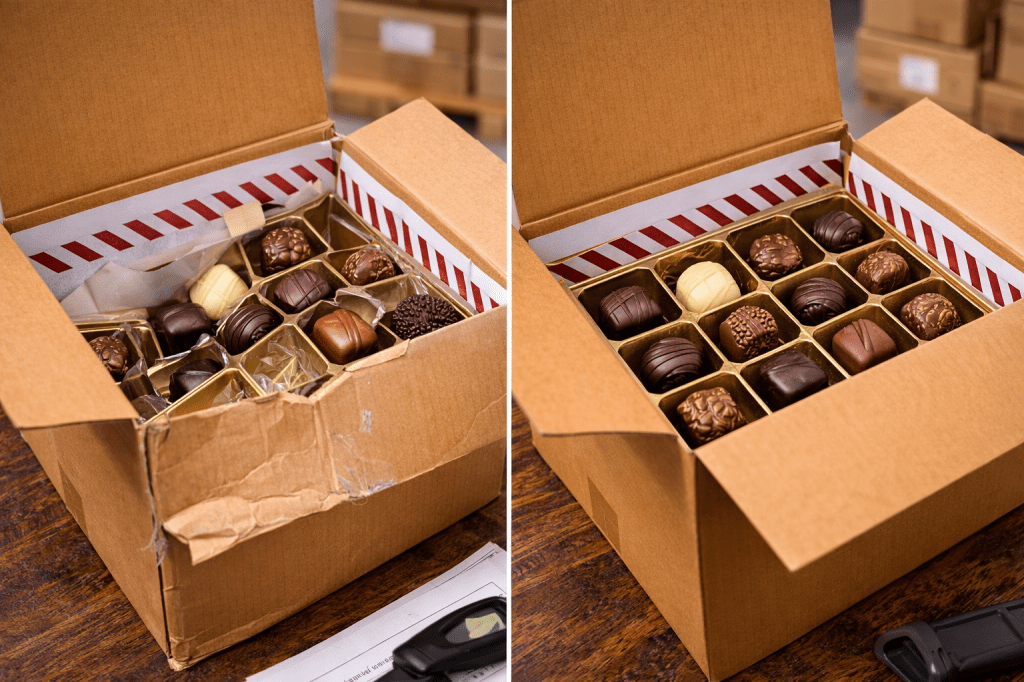
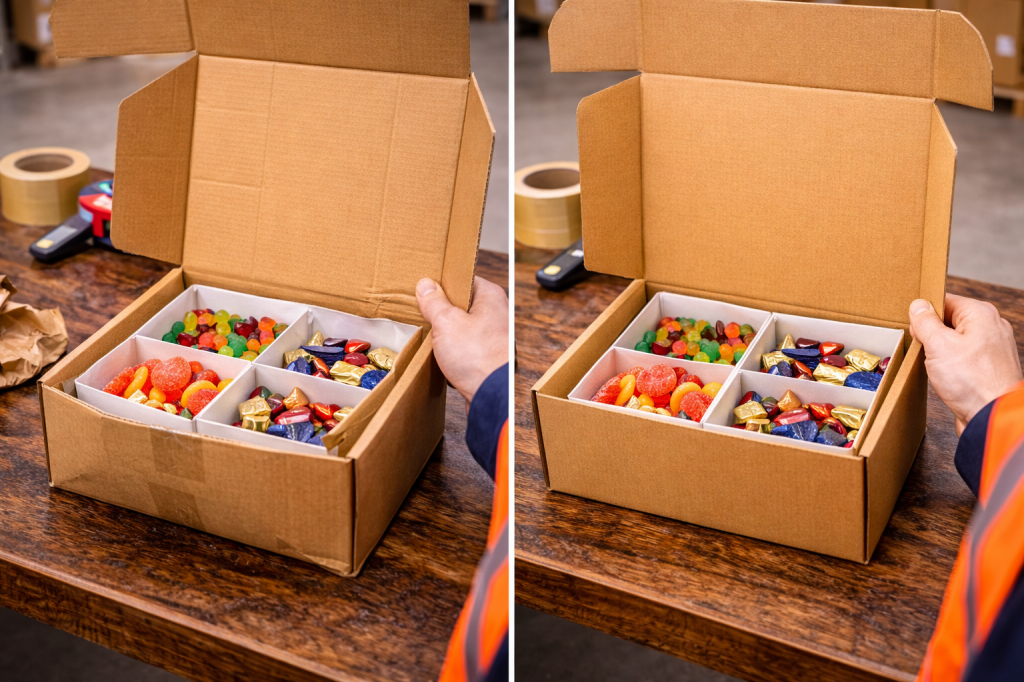
Candy boxes must safeguard sweets while avoiding making the sweet treat itself difficult to access. A lid that closes too firmly could either bend the lid, split it apart, or drop candies all over the ground upon the final opening. On the other end of things, a loosely closing lid may create its own set of problems since it may come off while being carried. The ideal balance point falls somewhere in-between these two extremes; and the initial touch should give the impression of simplicity.
Whoever ultimately has to open the box may greatly influence what kind of design elements you include. A retail employee might deal with 20-30 boxes per day. An individual buying a gift for someone else, however, will likely just open one. And then there are children, older adults, and individuals whose hands hurt due to illness or injury who may find it difficult to manipulate the tab(s) or fold(s). While most consumers can easily use their thumb and index finger to pry open a candy box using a bit of force if needed, some consumers will need to use a knife to pierce through a seam, or pull with both hands. In such cases, you are asking the consumer to do more work than necessary to open the box.
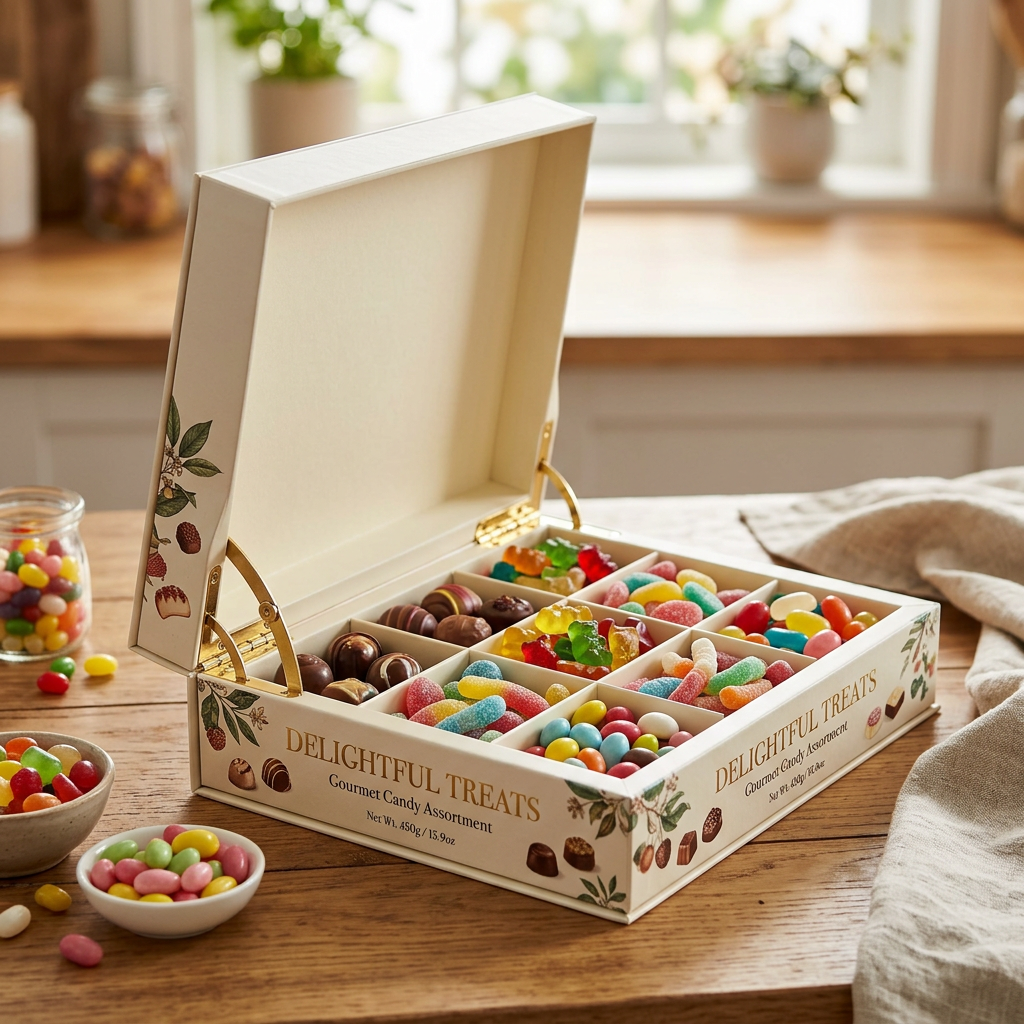
The configuration and/or style of the lid make an enormous impact on ease of opening. There are candy boxes with lids that lift straight up (e.g., pop-up tops), and ones that utilize folding flaps or sleeves that slide aside. While a lift-off top can evoke a level of excitement for gifts, sufficient clearance must exist along the edges of the lift-off top for the user’s fingers. A folding top must be able to close securely, but not so much that the area where the customer must pull in order to open the package is hidden.
Ribbons and stickers can certainly contribute toward creating an aesthetically pleasing appearance, yet ribbons and stickers can also interfere with opening. Wherever possible, stickers should be placed so that customers can remove them (via peeling or cutting) without damaging the contents of the candy box. Any ribbon used should yield to gentle pulling rather than becoming knotted. Simplicity often works best since the consumer can focus on enjoying their experience without having to fight against the packaging.
Easy opening is not synonymous with poor packaging. Candy boxes still require sufficient closure so they remain secure on a store shelf, inside a gift bag, etc…; or even during brief periods of transport. Try filling one sample, holding it at various angles, and carrying it manually. Should the lid move during these actions, consider a small seal (or a belly band) or additional outer wrapping/covering prior to selecting a box that is difficult to open.
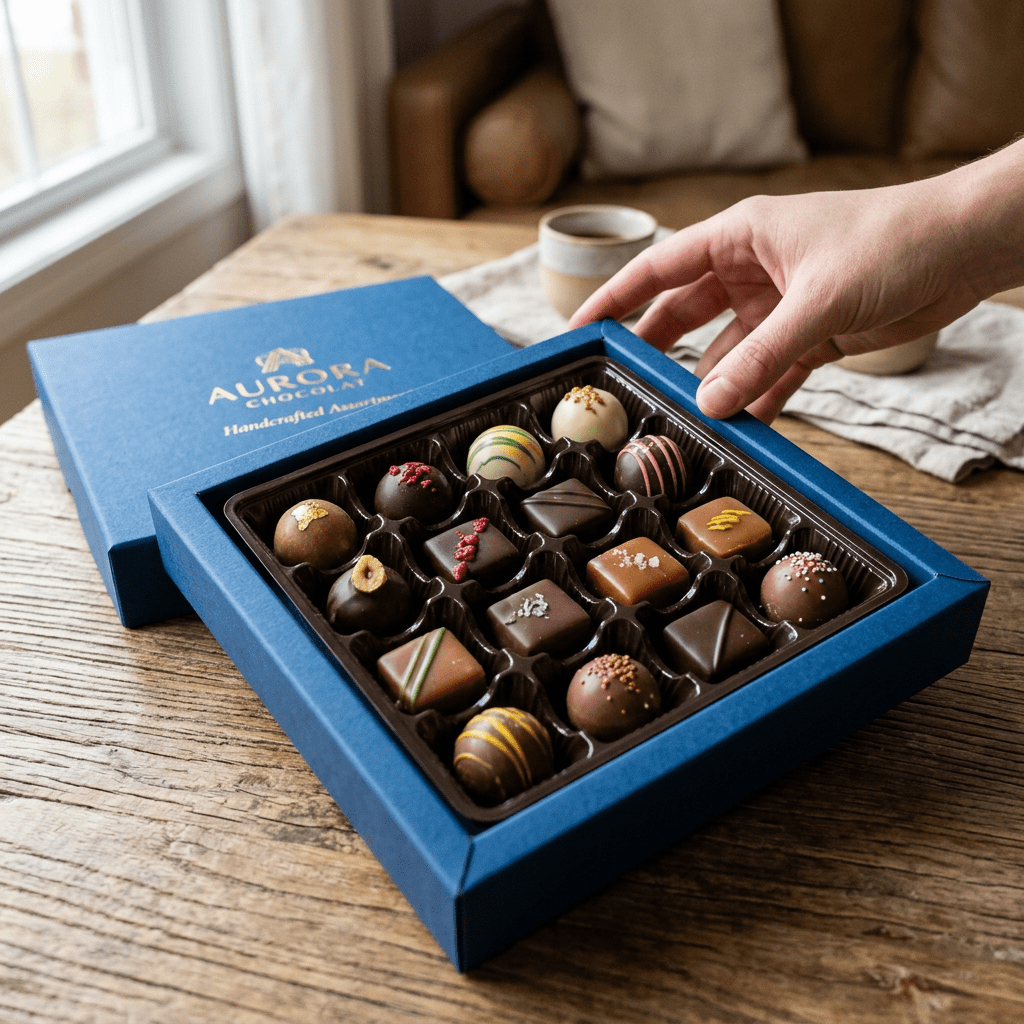
Additionally, the interior arrangement of the candy box can assist in terms of ease-of-opening as well. Create some extra room near the edge of the candy box so that users’ fingers do not push into the first row of candy items. In addition, if you fill a candy box to maximum capacity, the lid will rub against candy or become more difficult to raise/lift.
It is recommended to observe several different consumers attempting to use your completed product before placing a larger order. Tell them nothing regarding which direction to pull in order to release the closure mechanism, nor inform them which orientation they should use when trying to open it. Their first action will demonstrate whether or not your design is practical. Take note of any bent corners, spilled candies/pieces, or confused expressions. These tests can potentially save you a great deal of time and frustration as you avoid annoying your potential customers. Quality-designed candy boxes safely hold candies, allow for easy opening without struggle, and ensure that candies continue to produce happiness for customers.