How to protect candy shipments

Shipping candy sounds simple until you start seeing small issues show up. Pieces arrive shifted, coatings get marked, and sometimes the entire presentation looks different than when it left your hands. These problems usually come from movement and pressure during storage and transit, not from the product itself.

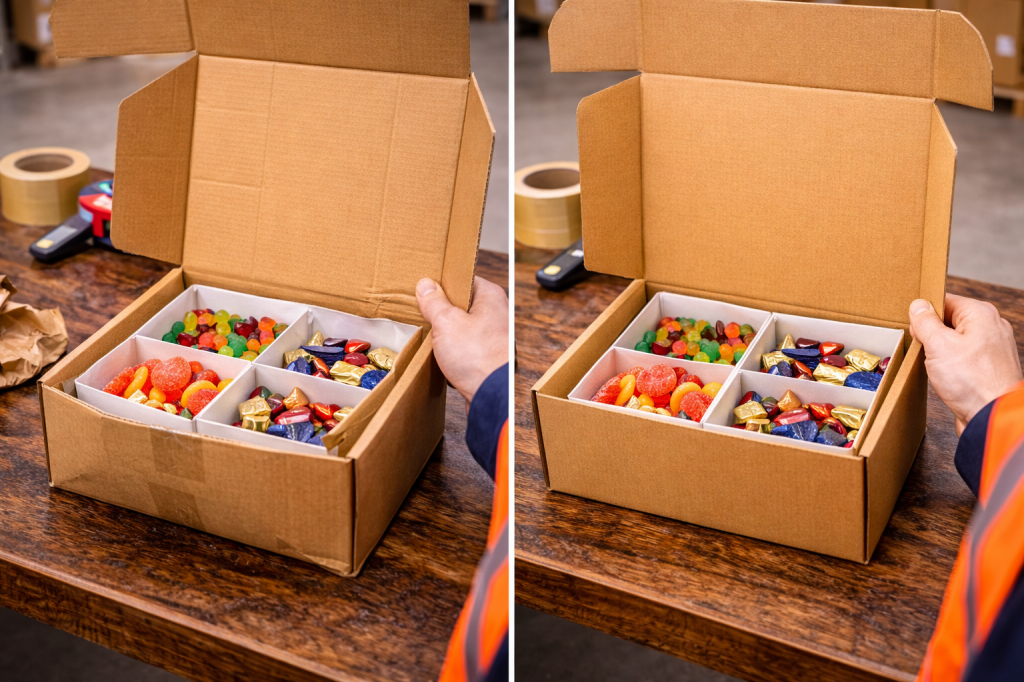
Candy is sensitive to both space and structure. If there is too much empty room inside the box, items move around as the package is handled. That movement leads to rubbing, which can dull finishes or cause pieces to stick together. On the other hand, if the space is too tight, pressure can build and affect the shape of the candy. The goal is to create a balanced fit where everything sits in place without being forced.

Assorted candy boxes and jelly beans covered in melted caramel inside a damaged cardboard box
A box of assorted candy with melted caramel dripping inside.

A well-sized candy box helps control that environment. When the dimensions match the product, items stay positioned the way they were packed. This reduces the chance of shifting and helps maintain a clean, organized look when the box is opened. That first impression is important because it sets expectations before the product is even tasted.

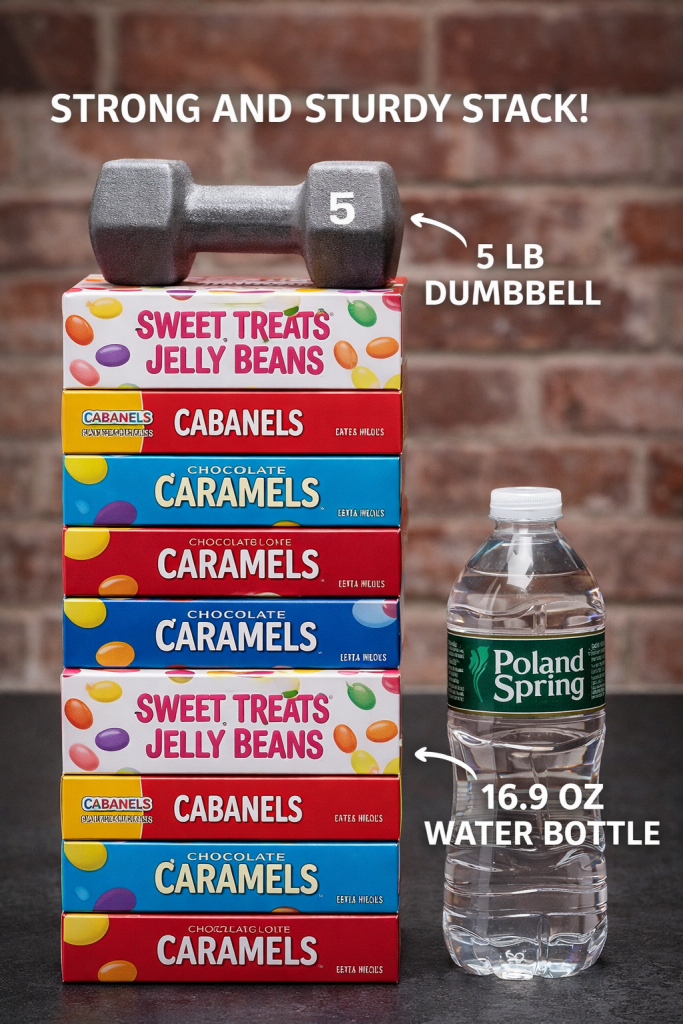
Structure also plays a major role. During shipping, packages are stacked, moved, and sometimes compressed under weight. A box that holds its shape protects the contents from that pressure. A weaker box can flex, and when that happens, the contents inside absorb the impact. Choosing a box with enough strength to handle stacking and movement helps prevent this type of issue.

Another factor to consider is how the candy is placed inside the box. Items should be arranged in a way that distributes weight evenly. When weight is concentrated in one area, it increases the chance of damage during transport. A balanced layout helps maintain stability and reduces stress on any single point.

Assorted candy boxes and jelly beans covered in melted caramel inside a damaged cardboard box
A box of assorted candy with melted caramel dripping inside.

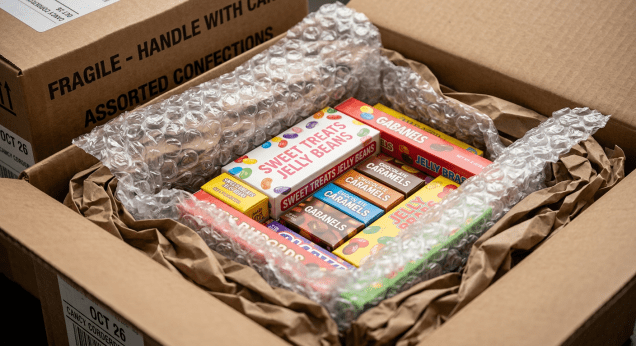
Handling before shipping matters as well. Candy often sits for a period of time before it is packed or sent out. During that time, exposure to air and contact with other surfaces can affect its condition. Using a consistent packing process, including protective layers when needed, helps preserve quality from the moment the product is prepared to the moment it is delivered.

Presentation is closely tied to protection. When a customer opens a box and sees candy arranged neatly without marks or shifting, it reflects a higher level of care. That experience is shaped by the packaging choices made earlier in the process. A well-designed candy box supports both protection and presentation at the same time.

Assorted candy boxes and jelly beans covered in melted caramel inside a damaged cardboard box
A box of assorted candy with melted caramel dripping inside.

Many modern candy boxes are also made with recycled materials that still provide reliable performance. This allows businesses to choose packaging that meets practical needs while also using materials more efficiently. It is a straightforward approach that does not require sacrificing durability.

In the end, protecting candy during shipping comes down to controlling movement, maintaining structure, and choosing the right size. When these elements are handled correctly, products arrive in the same condition they were packed, and the overall experience improves for both the sender and the customer.

The Size Mistake Adds Cost

Candy sellers frequently devote considerable amounts of time to checking shipping cost. When comparing various delivery services, they check prices and try to save money. Shipping box size is an area that is often ignored.

An initial thought is that a box is simply a box. Once the candy has been placed inside the box, the job appears complete. However, a shipping box’s size will impact considerably more than most would think.

Whether box size actually matters is something that many business owners want to know. The short and sweet answer is “yes.”

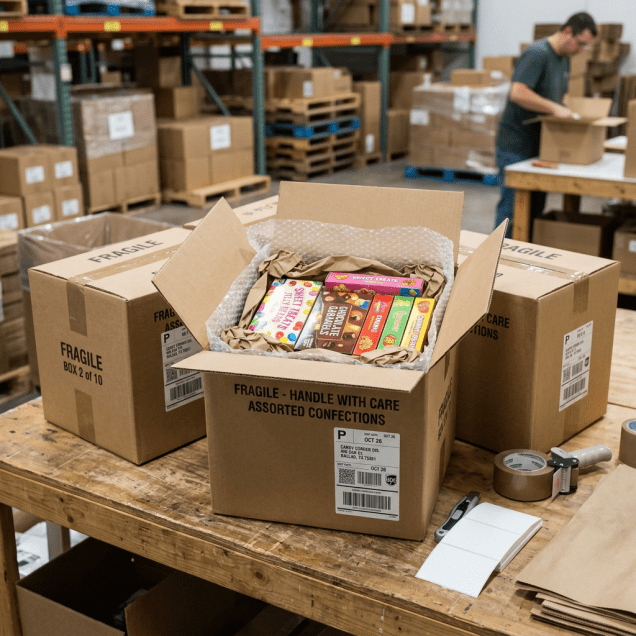
When a candy box is significantly larger than its contents, this creates extra space. This unused space generally requires additional packaging materials (packing paper, air pillows, etc.) to fill. Packaging materials can provide protection but add time to the packing process.

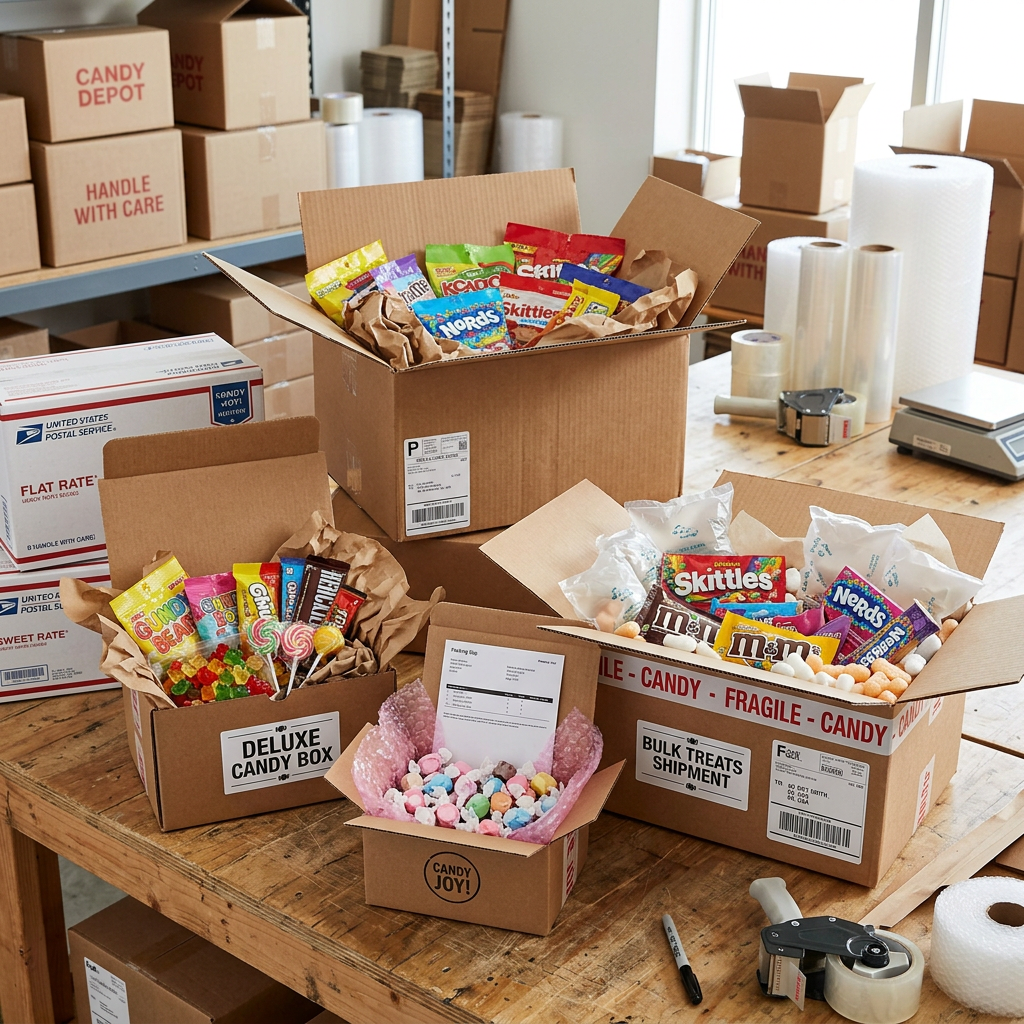
Open cardboard boxes filled with assorted candy and shipping materials on a wooden table
Four different candy boxes filled with various sweets are prepared on a wooden table for shipment.

If we picture a busy business owner, who packs fifty or one hundred packages per day. And, the majority need a little added filler. Those little added seconds quickly accumulate over weeks and months.

When using a candy box that is correctly sized, it may increase efficiency in packing due to less unused space to manage. The item should fit securely within the package; the package will feel safer; and the packer will have a smoother working environment.

The next general question is does box size affect shipping costs. Yes, it can.

Carriers consider box measurements when computing shipping costs. Even though items inside might be light weight, a larger box may consume a portion of a truck space. Selecting a box that best fits the item, may prevent spending on unwanted space.

Lastly, the customer experience is impacted by box size. Can anyone remember receiving a large shipment with a very small product inside? Most people do recognize when a shipment seems larger than the item(s) received.

A box that best fits the merchandise ordered, may seem more organized and professional. This may enhance how your customer perceives your product when opening their package.

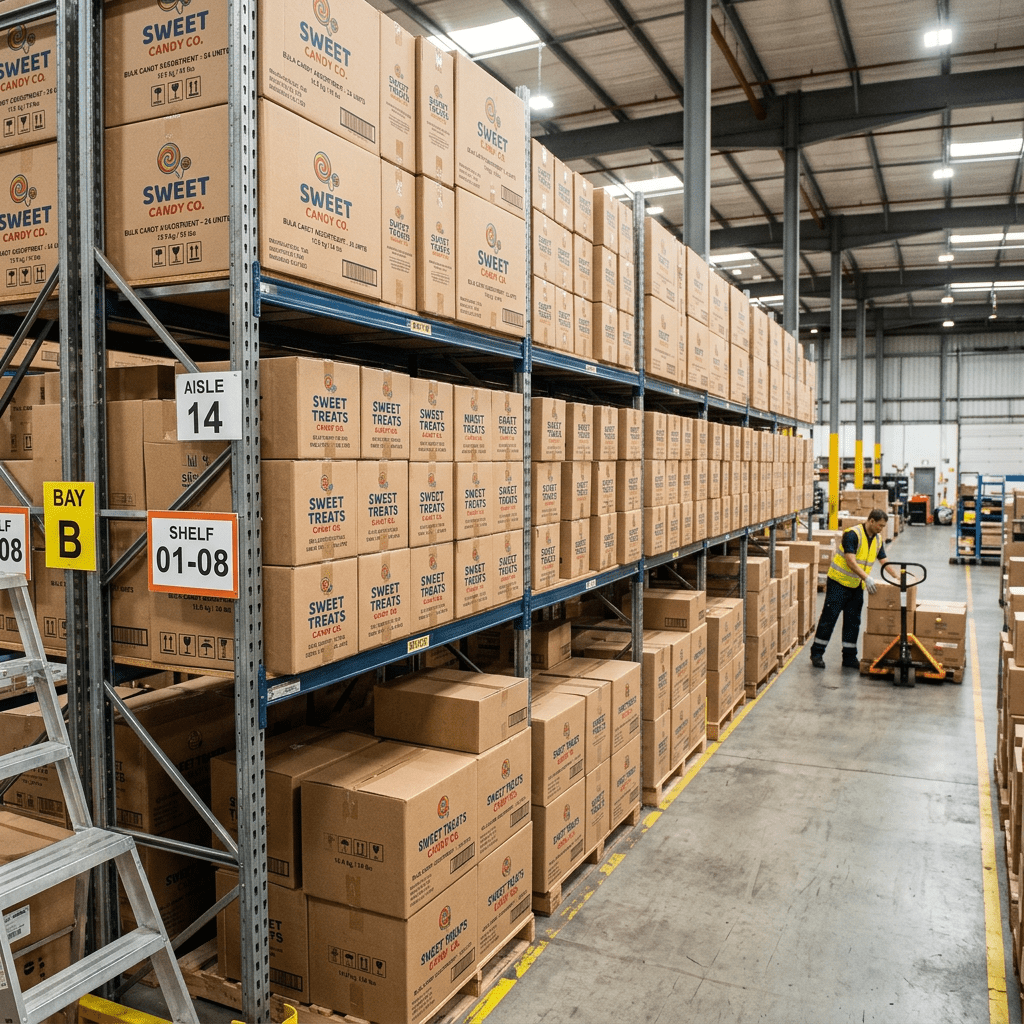
Warehouse aisle filled with stacked boxes labeled Sweet Treats by Sweet Candy Co., worker using pallet jack
A worker organizes boxes of Sweet Candy Co. treats in a spacious warehouse aisle.

Box storage is also critical. Any company utilizing a number of different box sizes may find difficulty keeping the shipping department organized. Shelves get crowded with supplies that cannot easily be located by employees. Employees may spend some extra time locating the correct box to utilize.

Utilizing a reduced quantity of selected candy box sizes can assist companies in creating a faster and efficient work place. Supplies can be stocked and counted more efficiently; supplies can be accessed easier; and employees can find the required supplies quicker.

In addition to choosing the right candy box size for packing purposes, many businesses also select sizes based on minimizing waste. With minimal amount of packaging material and supplies utilized during packing, it is advantageous for both the seller and buyer.

Choosing the right candy box size isn’t just about putting candy in a box. It is about creating packing easier, control costs, organize, and ensure products arrive safely. The decision made while packing small candies can result in great results, and finding the right size is one of the easiest things you could improve in your business.

Stop Crushed Chocolates

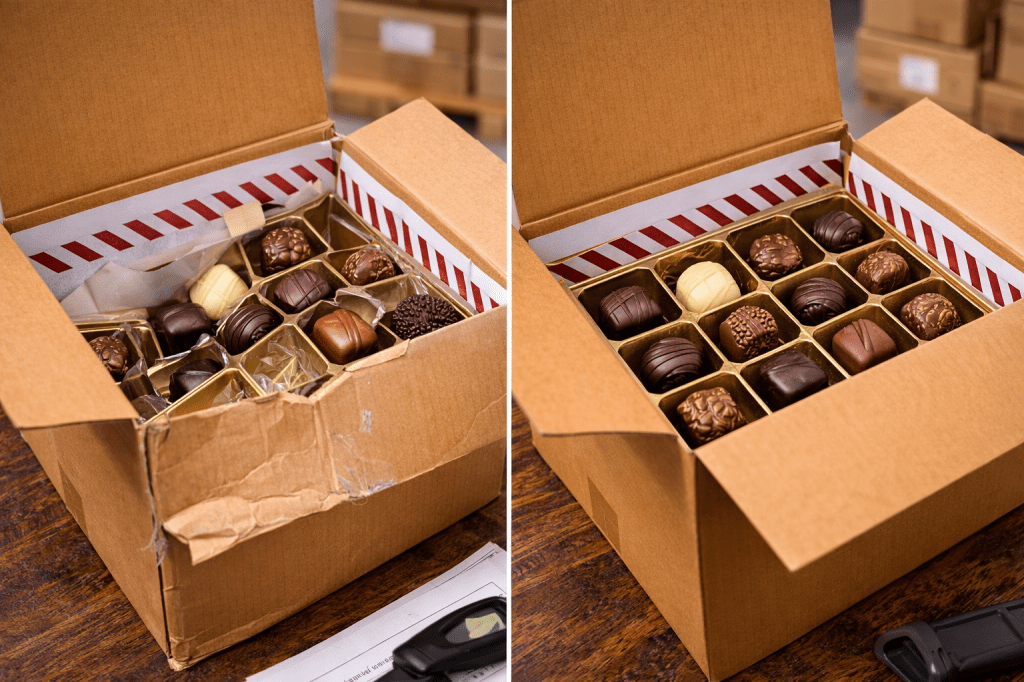
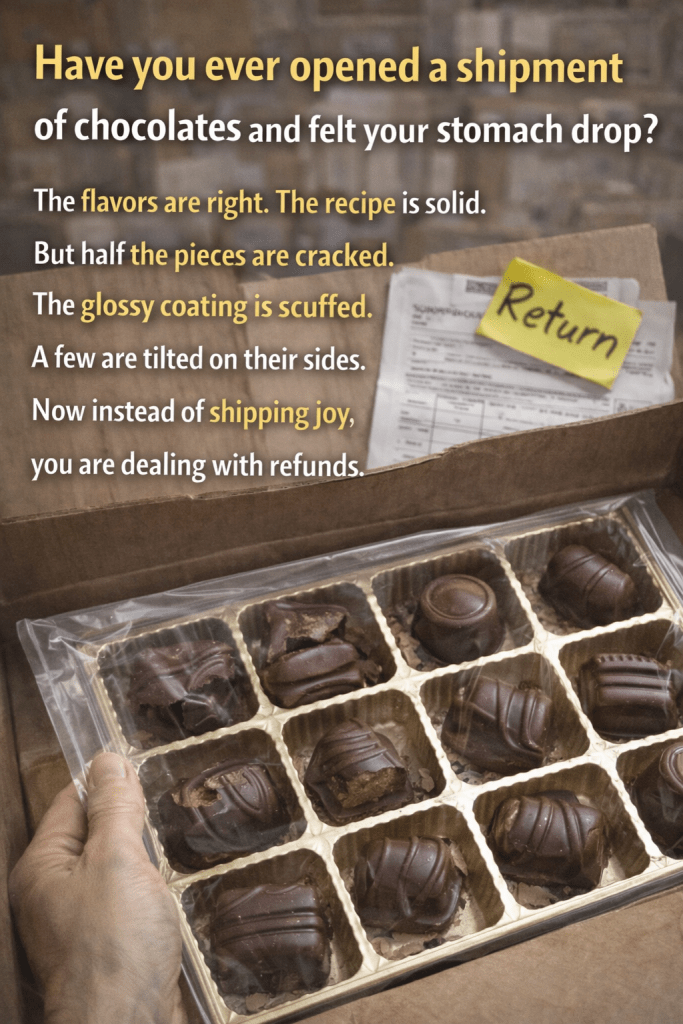
Have you ever opened a shipment of chocolates and felt your stomach drop? The flavors are right. The recipe is solid. But half the pieces are cracked. The glossy coating is scuffed. A few are tilted on their sides. Now instead of shipping joy, you are dealing with refunds.

Crushed candy is rarely about taste. It is usually about structure.

Candy boxes are more than containers. They are protection systems. If the structure is weak, pressure from stacking and transport presses down on the lid. That pressure transfers directly to the candy inside.

Start by thinking about board thickness. Lightweight cartons may look fine sitting on a shelf, but once they are stacked in transit, the top panel can flex. When the lid dips inward, even slightly, delicate chocolate shells can fracture.

Now imagine pressing gently on the top of a thin box. You feel it give under your fingers. That same pressure happens during shipping, only heavier and repeated many times.

Upgrading board weight creates resistance. A sturdier box keeps its shape under stacking pressure. When the top panel stays firm, the candy stays safe.

Next, consider internal support. Loose pieces inside a wide-open space move during transport. Each bump in the road shifts them slightly. That movement causes rubbing. Rubbing creates scuffs. Scuffs lower perceived freshness.

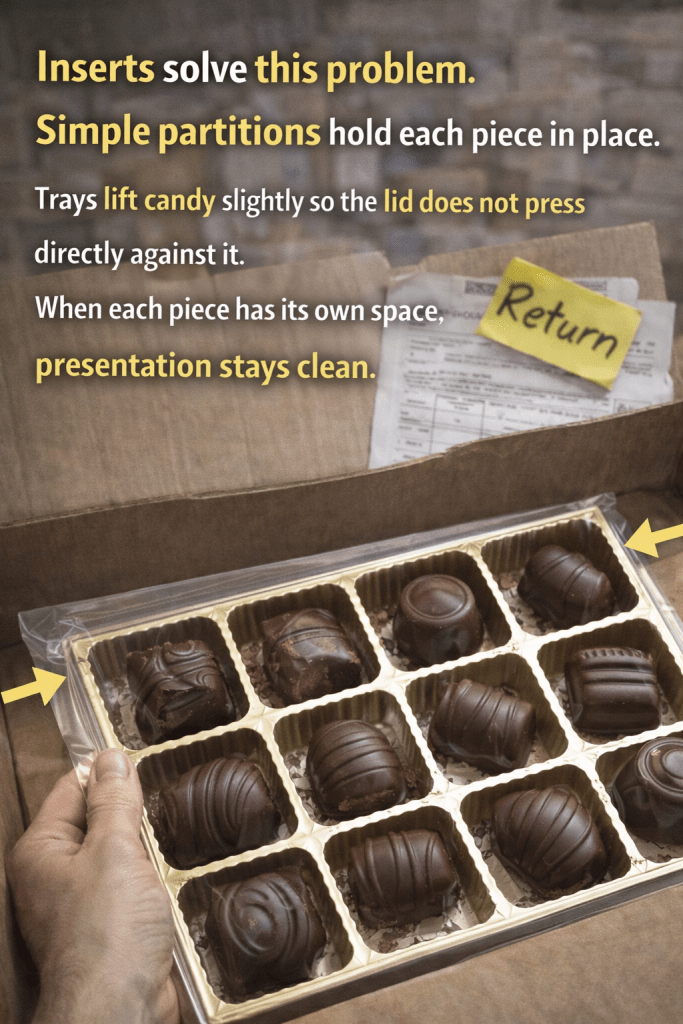
Inserts solve this problem. Simple partitions hold each piece in place. Trays lift candy slightly so the lid does not press directly against it. When each piece has its own space, presentation stays clean.

Think about lid design too. A secure closure prevents the top from popping open. If a lid shifts even a little, it can press unevenly against one side. That uneven pressure leads to breakage.

Picture a customer opening a box where every chocolate sits perfectly aligned. No cracks. No smears. The glossy finish reflects light cleanly. That moment feels premium. It feels worth the price paid.

Outer packaging also matters. Even strong candy boxes benefit from protective shipping cartons. Cushioning materials absorb impact before it reaches the inner box. Combining sturdy inner packaging with solid outer protection creates a double layer of defense.

Before choosing your next run of candy boxes, ask a few clear questions. How high will these be stacked? How far will they travel? Are the pieces delicate or firm? Will customers give them as gifts?

Answering those questions helps you choose the right structure and internal support. It is not about overbuilding. It is about matching protection to need.

When candy arrives intact, customers focus on flavor, not flaws. That positive first look sets the tone for the entire experience. Protect the structure, and you protect the product.