Keeping Candy Fresh For Longer

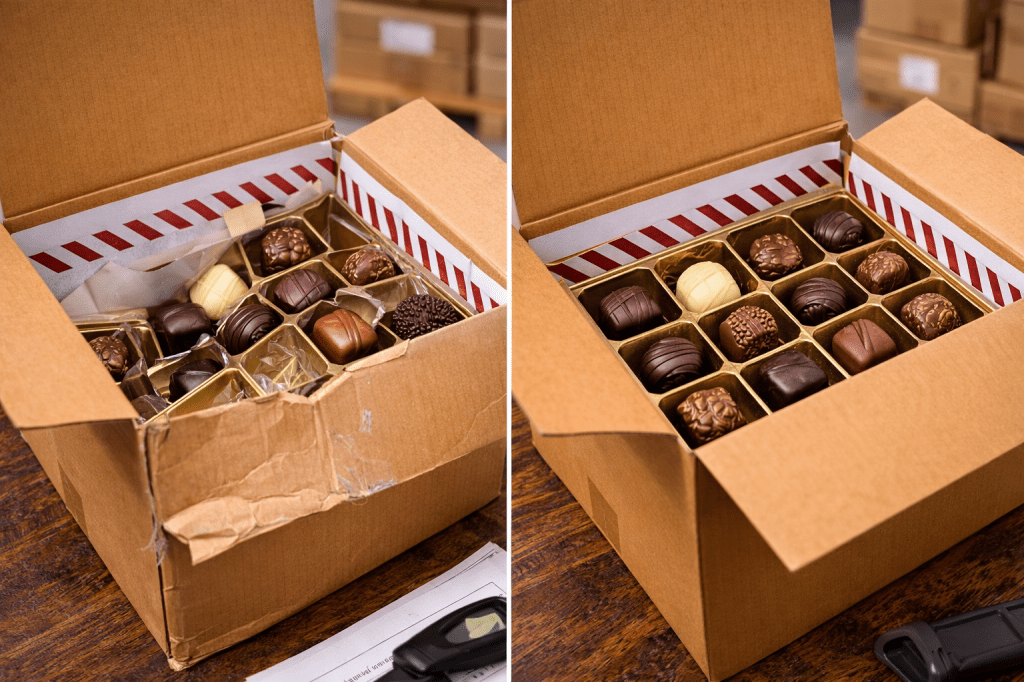
Probably the number one question people have is how candy boxes contribute to keeping your candy fresh. Of course, the candy recipe is critical, but so is the packaging process. Protecting the candy from the point at which you’ve completed making it through to the moment the person takes their very first bite is the responsibility of both the candy maker (and) the packaging. If your candy is not properly packaged, the quality of the candy can rapidly decline. When chocolate candies are improperly packaged, they will scratch; candies with a coating will chip; and soft candies will develop irregular shapes due to excessive movement. A well-sized candy box will assist in minimizing this type of movement while being stored and/or shipped.
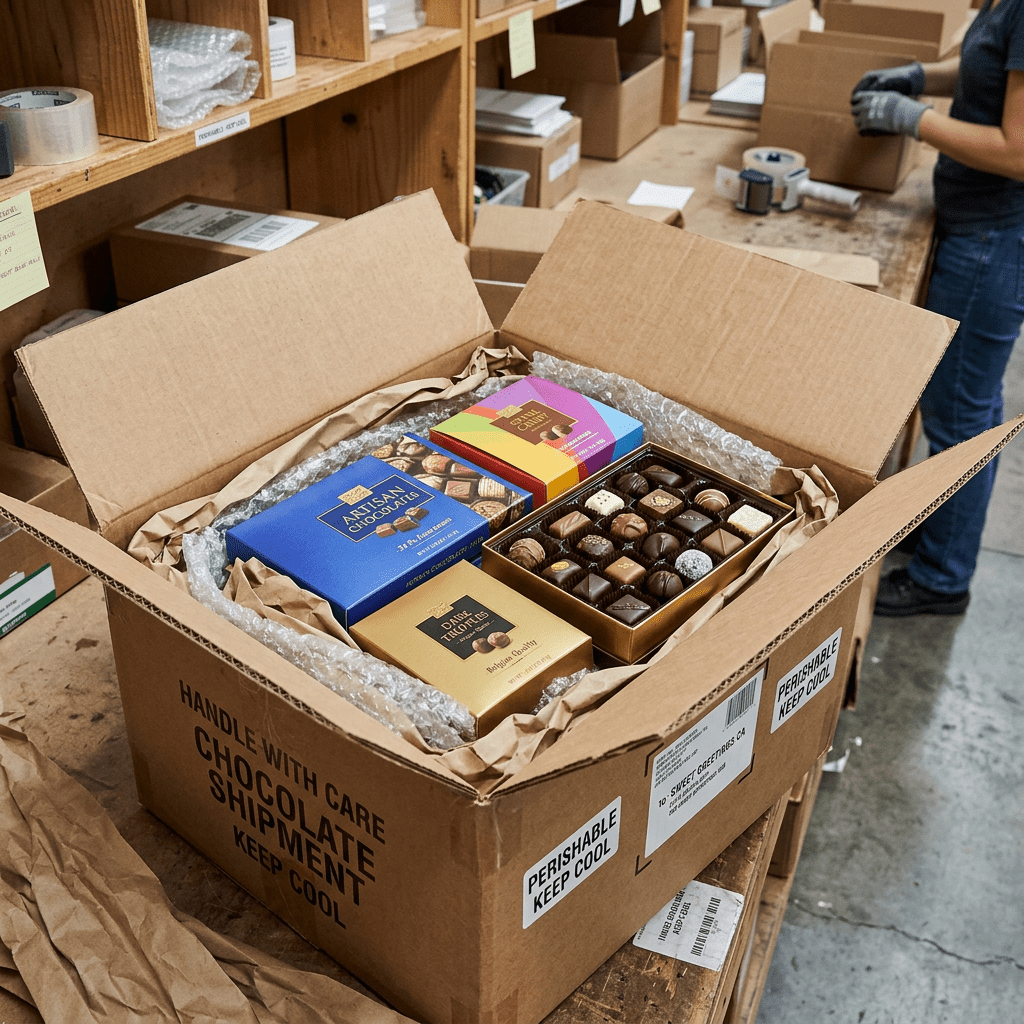
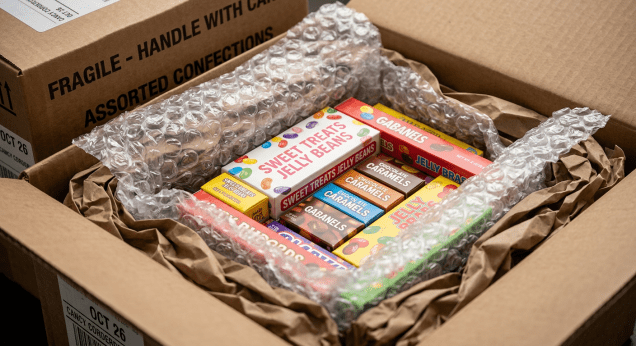
Open cardboard box with assorted chocolates packed inside and handled with care labels
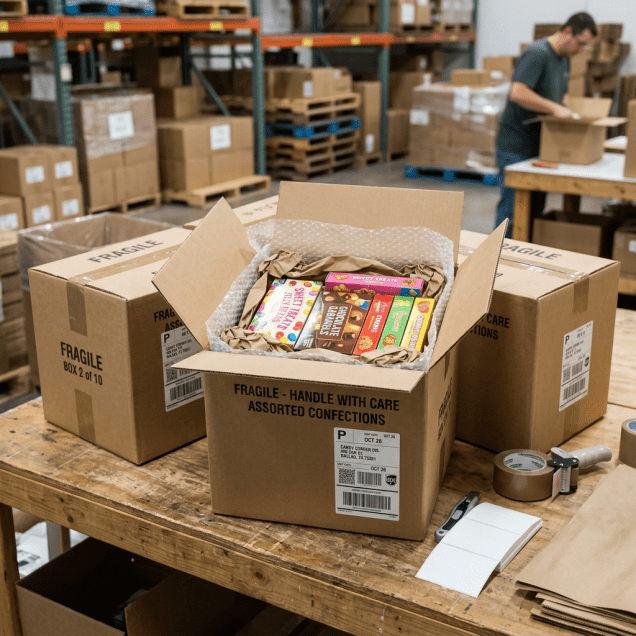
A box filled with assorted chocolates being packed securely for shipment

Protecting the candy from all the possible damage associated with ordinary handling is another advantage of having an excellent candy box. Even before your candy arrives at the customer’s home, it has been moved multiple times. Your product might be stored in a warehouse; placed upon delivery vehicles; displayed on retail display shelving; or wrapped for gifting purposes. Each of these steps provides yet another opportunity for the candy to become displaced/bumped/shifted. Having a solid, high-quality candy box reduces this possibility and maintains the integrity of the product.

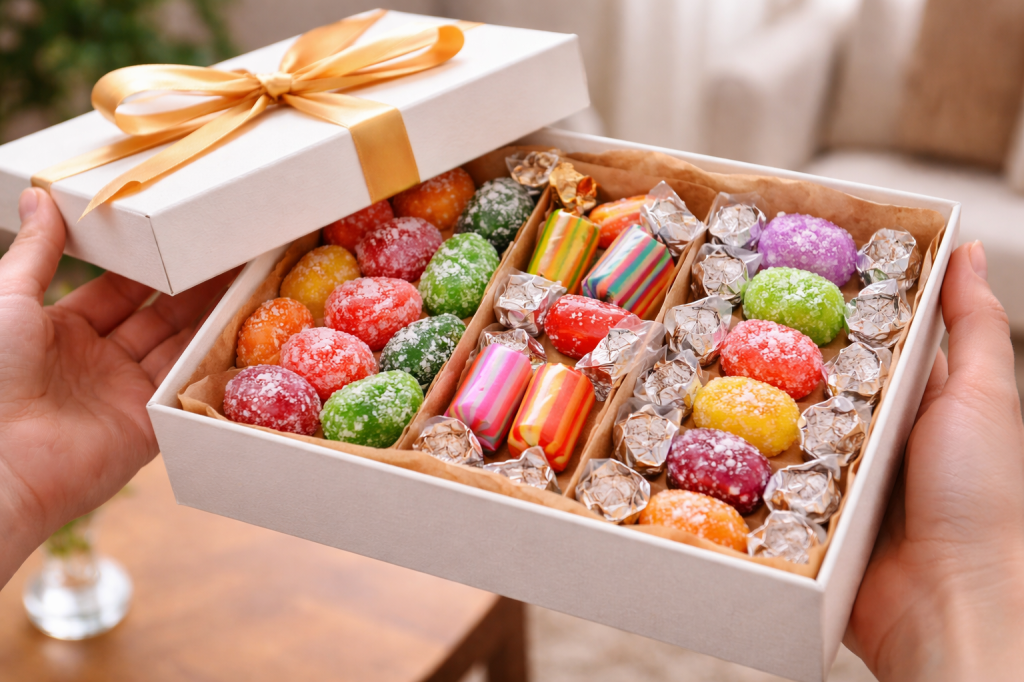
In addition to providing protection and maintaining quality, many candy manufacturers give considerable thought to the presentation aspect of their products. Customers purchase candy to provide as birthday gifts; holiday gifts; wedding gifts; gifts at baby showers; and thank-you gifts. The box in which your candy is sold becomes an integral component of the gift itself. An aesthetically pleasing/cleanly designed box generates excitement prior to opening. A beautifully designed box can add significantly to the perceived value of your gift.

Customers often inquire whether purchasing a larger candy box results in a higher-quality box. However, in most instances, it does not. There is extra room inside a larger candy box allowing candies to shift against one another while being shipped. Shifting candies can result in chocolate cracking; breakage of candies; or messiness resulting from coatings. Choosing a box that closely fits your candies ensures that each individual piece of candy remains neat and ready to consume.

An additional factor to consider is storage. Candy boxes that are designed to stack allow retailers/warehouses to easily organize their inventories. Inventory counts are more accurate; inventory retrieval is easier; and damages related to inventory storage are reduced. In addition, organized storage areas enable employees to complete their tasks more efficiently.
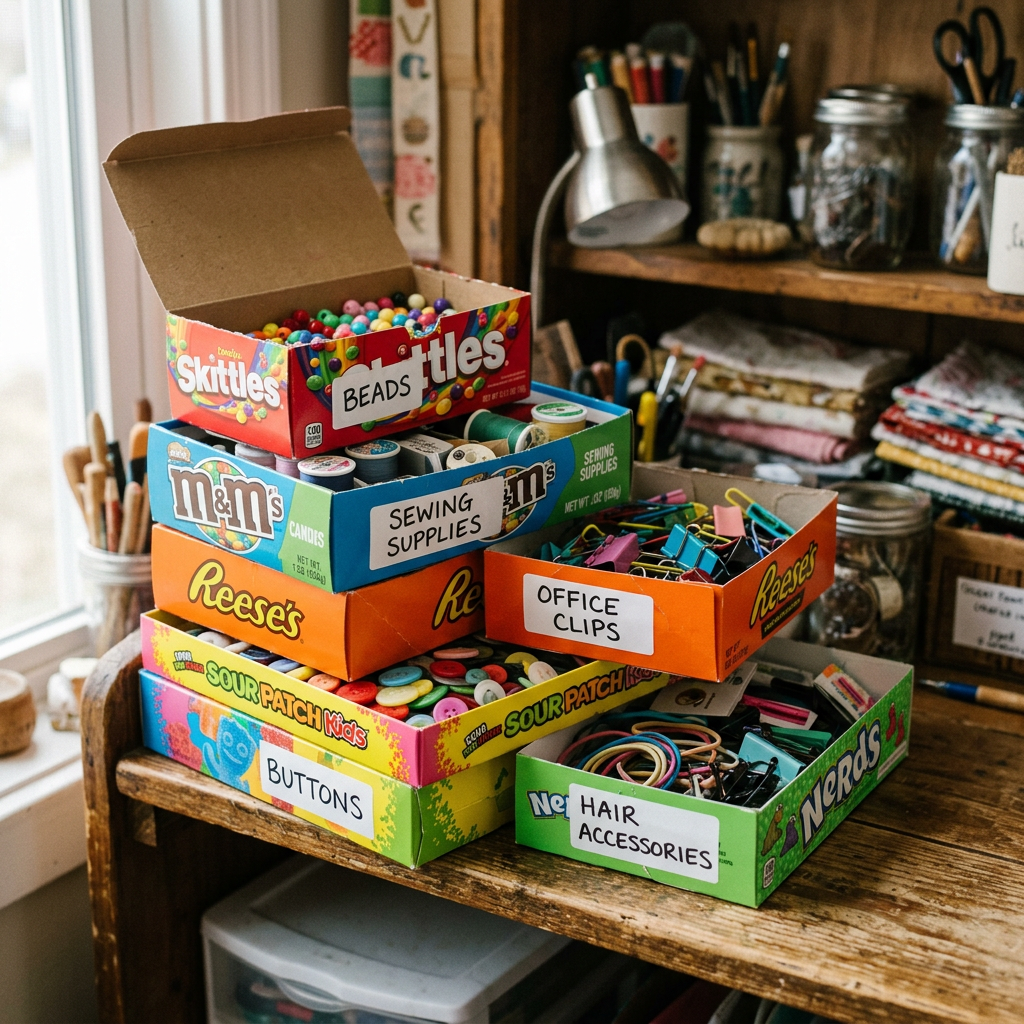
Candy boxes labeled and filled with beads, sewing supplies, office clips, buttons, and hair accessories.
Candy boxes repurposed as colorful storage containers for craft supplies.

A final note regarding candy boxes: Many paper-based candy boxes can be recycled after use (dependent upon your local recycling program). Some customers will even reuse sturdy candy boxes to store small items such as craft supplies or mementos, long after they have consumed the candy contained within. Providing an alternate function for packaging materials contributes toward reducing excess waste.

Ultimately, selecting the correct candy box serves far more than merely holding sweet treats. It protects fragile treats; enhances their visual appeal; promotes more efficient inventory management; and ultimately produces an unforgettable experience for your customers. By investing time in finding the perfect box, each piece of candy will continue to look as delicious as the day you lovingly prepared them.
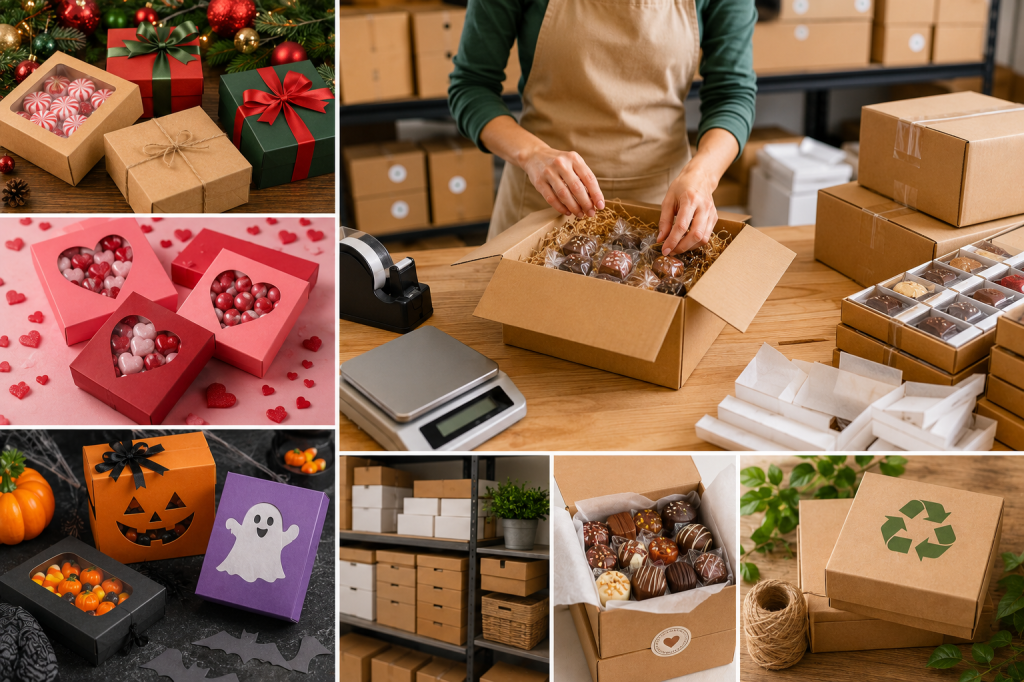
Stop Crushing Your Profits

A lot of candy businesses lose money in ways they never notice at first. They focus on recipes, flavors, labels, and advertising, but they overlook the one thing sitting between the candy and the customer the entire time. The box matters more than most people think because packaging problems can quietly create waste, damage, and unhappy buyers.

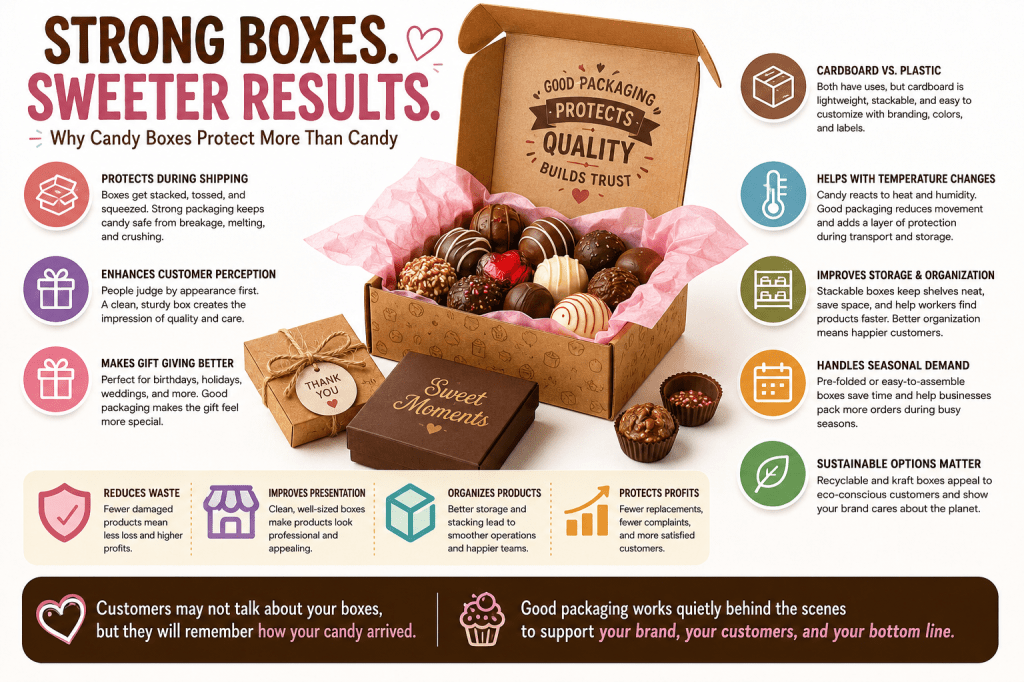
One question people ask often is why candy boxes need to be strong if candy itself is light. The answer is simple. Candy may not weigh much, but shipping boxes get stacked, tossed, bumped, and squeezed during delivery. A weak candy box can collapse faster than people expect, especially during busy seasons when packages move through warehouses quickly.

This becomes a bigger problem for small businesses that ship handmade products. Homemade chocolates, brittle, truffles, and dipped treats usually cost more to make than mass-produced candy. If products arrive broken, melted, or smashed, replacing them eats into profits fast.

Another common question is whether fancy packaging really changes customer behavior. In many cases, it absolutely does. People naturally judge products by appearance before they ever try them. A neat candy box gives the impression that the business cares about quality. Even simple packaging can feel premium when it is clean, sturdy, and well sized for the product inside.

Gift giving is another reason candy boxes matter so much. Many customers buy candy for birthdays, holidays, weddings, baby showers, and thank-you gifts. In those situations, presentation becomes part of the purchase itself. Nobody wants to hand someone a crushed box with wrinkled corners. Strong packaging helps candy feel special before the box is even opened.

Some people wonder if cardboard candy boxes work better than plastic containers. Both have their uses, but cardboard remains popular because it is lightweight, stackable, and easier to customize. It also gives businesses more room for branding, colors, and labels without making the package feel bulky.

Temperature changes are another hidden issue people do not think about enough. Candy reacts quickly to heat and humidity. Chocolate can soften. Hard candy can become sticky. Caramel can shift around inside the box. Good packaging helps reduce movement and creates another layer of protection during transport and storage.

There is also the question of storage space. Candy shops and bakeries usually handle many product sizes at once. Boxes that stack properly make shelves easier to organize and keep products looking clean. When inventory stays neat, workers can find products faster and customers enjoy a better shopping experience.

Seasonal businesses especially benefit from quality candy boxes. During Christmas, Valentine’s Day, and Halloween, order volume often jumps quickly. Businesses need packaging that can handle higher demand without slowing down operations. Pre-folded or easy-to-assemble candy boxes help save time when workers are packing hundreds of orders.

Today many buyers also pay attention to environmental concerns. Recyclable candy boxes can appeal to customers who want less waste and cleaner packaging options. Some businesses even use natural-looking kraft boxes because they create a simple, handmade appearance people trust.

The truth is most customers will never compliment a candy box directly. They will not send emails talking about cardboard thickness or folding corners. What they will remember is whether the candy arrived looking clean, safe, and professional. Good packaging quietly protects the product and helps the entire buying experience feel smoother.

That is why candy boxes are not just containers sitting on a shelf. They help businesses reduce waste, improve presentation, organize products, and protect profits at the same time.

Why candy loses its magic

Have you ever saved a piece of candy for later, only to come back and find it does not taste the same? Maybe it feels dry, or the flavor seems dull, or it has turned into a sticky lump that is hard to enjoy. This happens more often than people think, and it can take the fun out of something that was meant to be a simple treat.

A common question people ask is why candy changes so quickly. The truth is that candy reacts to its surroundings. Air, heat, and even light can slowly affect how it looks and tastes. When candy is left in thin packaging or loose containers, it has little protection from these changes.

This is where candy boxes come in as a simple and helpful solution. Instead of leaving candy exposed, a box creates a more stable space around it. When you close the lid, it reduces how much air moves in and out. This helps the candy stay closer to how it felt the first time you opened it.

Think about opening a box a few days later and finding the candy still soft, still bright, and still full of flavor. That moment feels different. It feels like nothing was lost. The experience stays the same, and that is what most people want when they save something for later.

Another way candy boxes help is by keeping pieces from touching too much. When candy is packed tightly in a bag, it often sticks together, especially if it is warm. You may pull one piece out and find three more attached to it. In a box, there is more structure. The candy has space to sit without pressing into each other, which helps it keep its shape.

People also wonder how to make candy feel more like a gift without spending more money. The answer is often in the way it is presented. When candy is placed inside a neat box, it feels more thoughtful. Picture handing someone a small box that opens to reveal rows of treats, each one easy to pick up and enjoy. It creates a better moment, even if the candy is simple.

Candy boxes can also make a difference when you are planning events. Whether it is a birthday, a holiday, or a small gathering, having candy stored in boxes makes it easier to set things up. You can place them on tables, stack them neatly, and keep everything looking clean. There is no need to worry about spills or scattered pieces.

For those who care about reducing waste, candy boxes can also help in a small but meaningful way. When candy stays fresh longer, fewer pieces get thrown away. This means you enjoy more of what you bought, and less ends up in the trash.

In the end, candy boxes do more than just hold sweets. They help protect the taste, keep the shape, and make each moment feel just a little more special. When candy keeps its magic from the first bite to the last, it becomes something worth slowing down and enjoying.

After The Holidays, Packaging Tells the Truth

January is when reality sets in for candy businesses. The holidays are over, the rush has passed, and there is finally time to look back without the pressure of nonstop orders. This is usually when packaging problems become obvious. Candy may have sold well, but boxes often tell a different story once things slow down.

Candy boxes go through a lot more than people realize. They are packed quickly, stacked high, moved across warehouses, loaded into trucks, and handled by multiple people before reaching the customer. If a box is weak, it will show. Lids loosen, corners dent, and presentation suffers. January is when those issues can no longer be ignored.

Many businesses notice that returns and complaints feel heavier after the holidays. Not always because the candy was bad, but because something arrived looking off. A cracked corner or a loose insert change how the entire product feels. Customers expect candy to arrive clean, neat, and gift-ready, even when it is not a holiday order.

January is also when brands start preparing for the next wave of demand. Valentine’s Day is the obvious one, but spring events, corporate gifts, and everyday orders follow closely. Candy boxes chosen now will be used repeatedly in the months ahead. This makes January the smartest time to evaluate quality and consistency.

Poor-quality boxes often slow down packing without anyone realizing it at first. When lids do not align or inserts slide around, packers adjust and fix issues on the fly. Those seconds add up. Over time, they turn into hours of lost productivity and frustration. Better candy boxes remove that friction. Everything fits the way it should, and packing becomes routine instead of a workaround.

There is also a cost factor that shows up clearly in January. During busy seasons, waste can hide inside high volume. Once things slow down, damaged boxes and reorders stand out. Choosing sturdy candy boxes reduces that waste and protects margins in a quieter month when every expense feels more visible.

January is when many businesses also rethink responsibility. Using boxes that hold up better means fewer replacements and less material thrown away. That approach is practical, not trendy. It is about using resources wisely and avoiding unnecessary loss. Well-made candy boxes support that goal naturally.

Consistency matters more than decoration. Customers may not praise a box when it works, but they notice when it fails. A solid candy box supports the product quietly. It keeps everything in place and lets the candy speak for itself. That consistency builds trust over time.

This slower month creates space to reset systems. Candy boxes are one of the easiest improvements to make because they touch every order. Better boxes improve packing speed, reduce damage, and support a more professional presentation without changing the product itself.

January does not need flashy changes. It needs smart ones. Candy boxes that perform reliably now will support smoother operations when volume increases again. Fixing packaging after problems show up is harder than fixing it during a calm month.

The start of the year is about building a stronger foundation. Candy boxes are part of that foundation. When they work the way, they should, everything else feels more stable moving forward.

How to protect candy shipments

Shipping candy sounds simple until you start seeing small issues show up. Pieces arrive shifted, coatings get marked, and sometimes the entire presentation looks different than when it left your hands. These problems usually come from movement and pressure during storage and transit, not from the product itself.

Candy is sensitive to both space and structure. If there is too much empty room inside the box, items move around as the package is handled. That movement leads to rubbing, which can dull finishes or cause pieces to stick together. On the other hand, if the space is too tight, pressure can build and affect the shape of the candy. The goal is to create a balanced fit where everything sits in place without being forced.

Assorted candy boxes and jelly beans covered in melted caramel inside a damaged cardboard box
A box of assorted candy with melted caramel dripping inside.

A well-sized candy box helps control that environment. When the dimensions match the product, items stay positioned the way they were packed. This reduces the chance of shifting and helps maintain a clean, organized look when the box is opened. That first impression is important because it sets expectations before the product is even tasted.

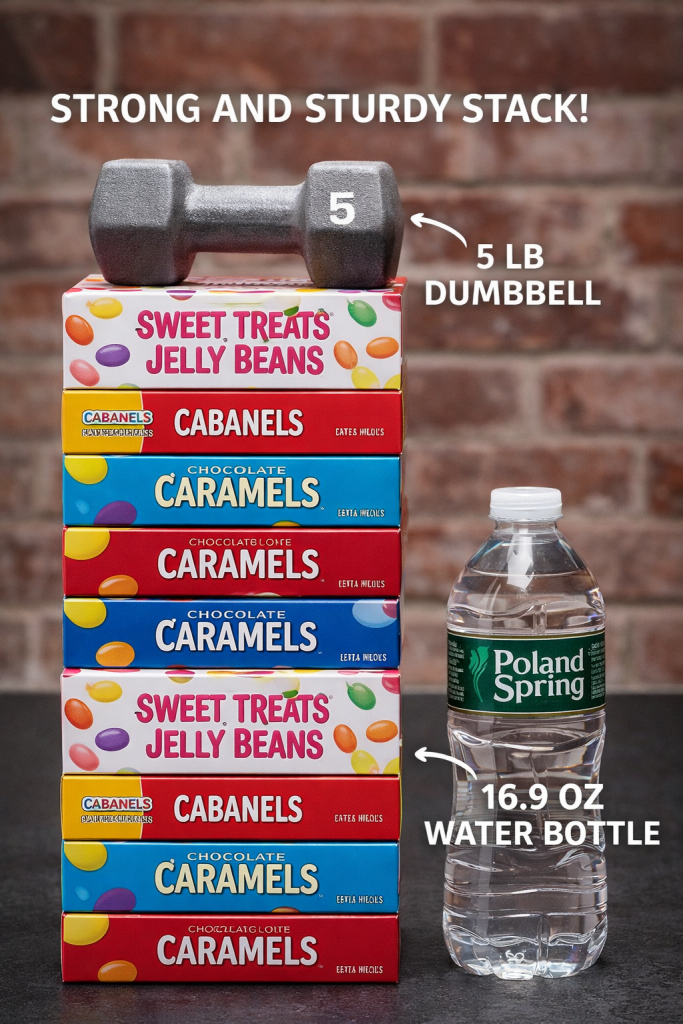
Structure also plays a major role. During shipping, packages are stacked, moved, and sometimes compressed under weight. A box that holds its shape protects the contents from that pressure. A weaker box can flex, and when that happens, the contents inside absorb the impact. Choosing a box with enough strength to handle stacking and movement helps prevent this type of issue.

Another factor to consider is how the candy is placed inside the box. Items should be arranged in a way that distributes weight evenly. When weight is concentrated in one area, it increases the chance of damage during transport. A balanced layout helps maintain stability and reduces stress on any single point.

Assorted candy boxes and jelly beans covered in melted caramel inside a damaged cardboard box
A box of assorted candy with melted caramel dripping inside.

Handling before shipping matters as well. Candy often sits for a period of time before it is packed or sent out. During that time, exposure to air and contact with other surfaces can affect its condition. Using a consistent packing process, including protective layers when needed, helps preserve quality from the moment the product is prepared to the moment it is delivered.

Presentation is closely tied to protection. When a customer opens a box and sees candy arranged neatly without marks or shifting, it reflects a higher level of care. That experience is shaped by the packaging choices made earlier in the process. A well-designed candy box supports both protection and presentation at the same time.

Assorted candy boxes and jelly beans covered in melted caramel inside a damaged cardboard box
A box of assorted candy with melted caramel dripping inside.

Many modern candy boxes are also made with recycled materials that still provide reliable performance. This allows businesses to choose packaging that meets practical needs while also using materials more efficiently. It is a straightforward approach that does not require sacrificing durability.

In the end, protecting candy during shipping comes down to controlling movement, maintaining structure, and choosing the right size. When these elements are handled correctly, products arrive in the same condition they were packed, and the overall experience improves for both the sender and the customer.

The Size Mistake Adds Cost

Candy sellers frequently devote considerable amounts of time to checking shipping cost. When comparing various delivery services, they check prices and try to save money. Shipping box size is an area that is often ignored.

An initial thought is that a box is simply a box. Once the candy has been placed inside the box, the job appears complete. However, a shipping box’s size will impact considerably more than most would think.

Whether box size actually matters is something that many business owners want to know. The short and sweet answer is “yes.”

When a candy box is significantly larger than its contents, this creates extra space. This unused space generally requires additional packaging materials (packing paper, air pillows, etc.) to fill. Packaging materials can provide protection but add time to the packing process.

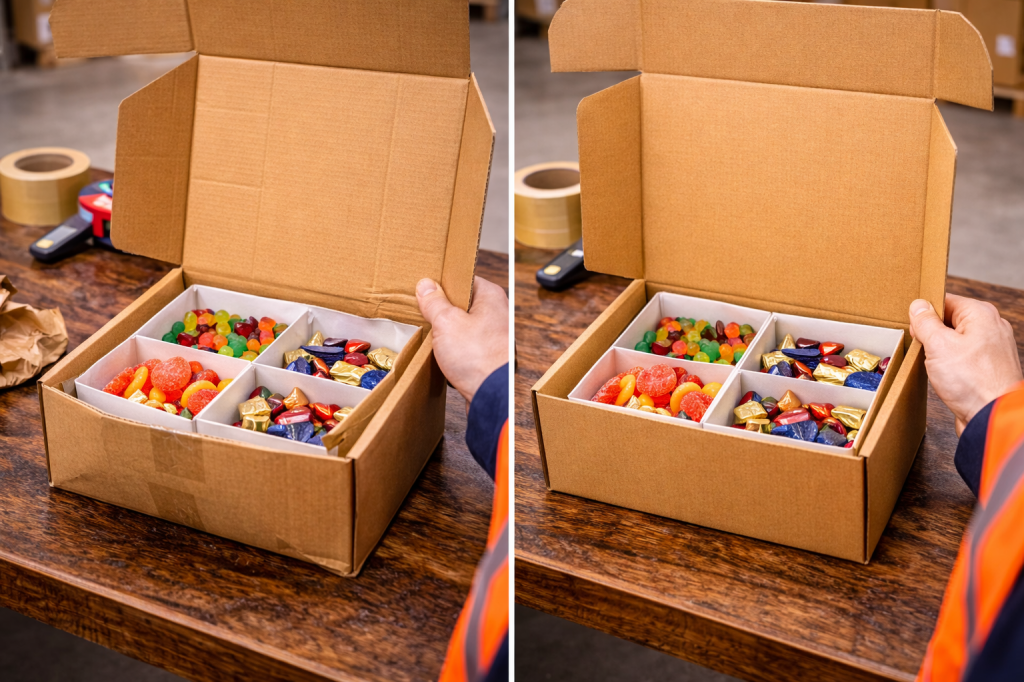
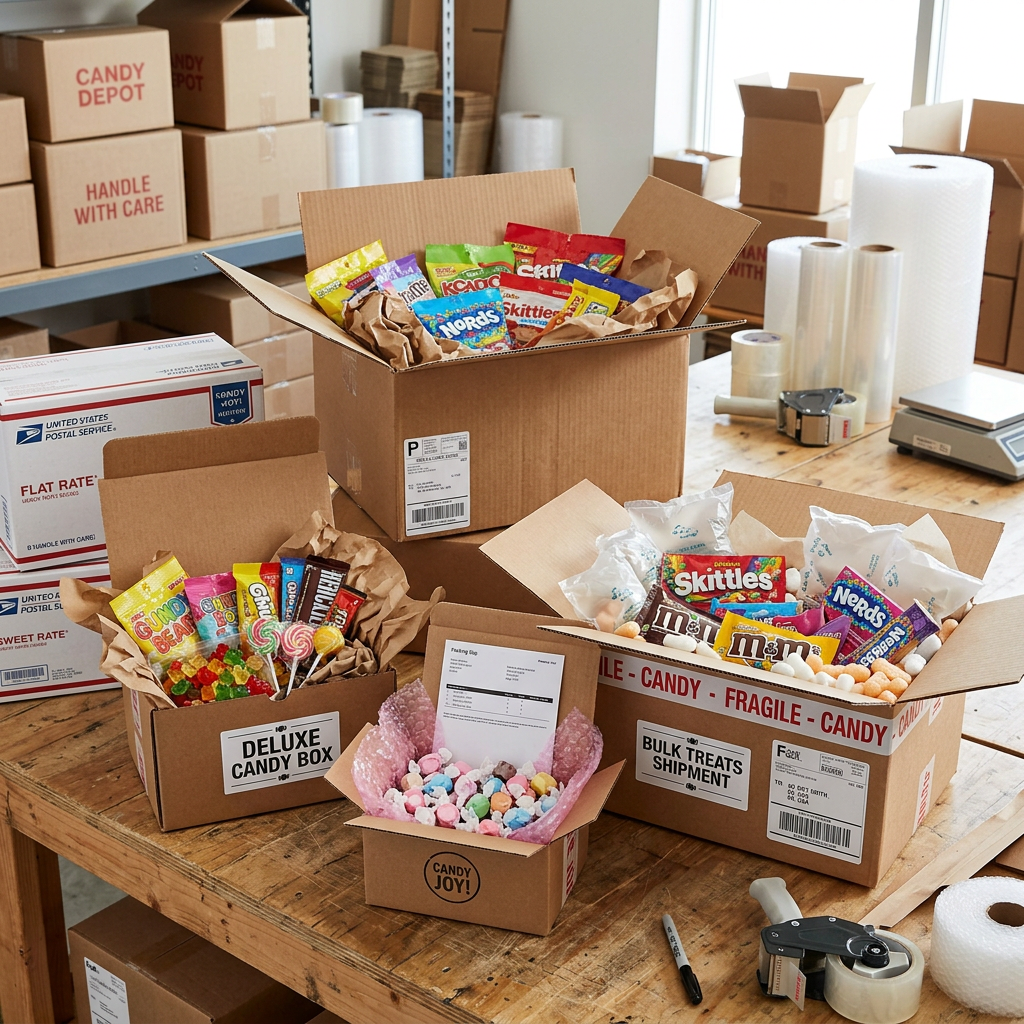
Open cardboard boxes filled with assorted candy and shipping materials on a wooden table
Four different candy boxes filled with various sweets are prepared on a wooden table for shipment.

If we picture a busy business owner, who packs fifty or one hundred packages per day. And, the majority need a little added filler. Those little added seconds quickly accumulate over weeks and months.

When using a candy box that is correctly sized, it may increase efficiency in packing due to less unused space to manage. The item should fit securely within the package; the package will feel safer; and the packer will have a smoother working environment.

The next general question is does box size affect shipping costs. Yes, it can.

Carriers consider box measurements when computing shipping costs. Even though items inside might be light weight, a larger box may consume a portion of a truck space. Selecting a box that best fits the item, may prevent spending on unwanted space.

Lastly, the customer experience is impacted by box size. Can anyone remember receiving a large shipment with a very small product inside? Most people do recognize when a shipment seems larger than the item(s) received.

A box that best fits the merchandise ordered, may seem more organized and professional. This may enhance how your customer perceives your product when opening their package.

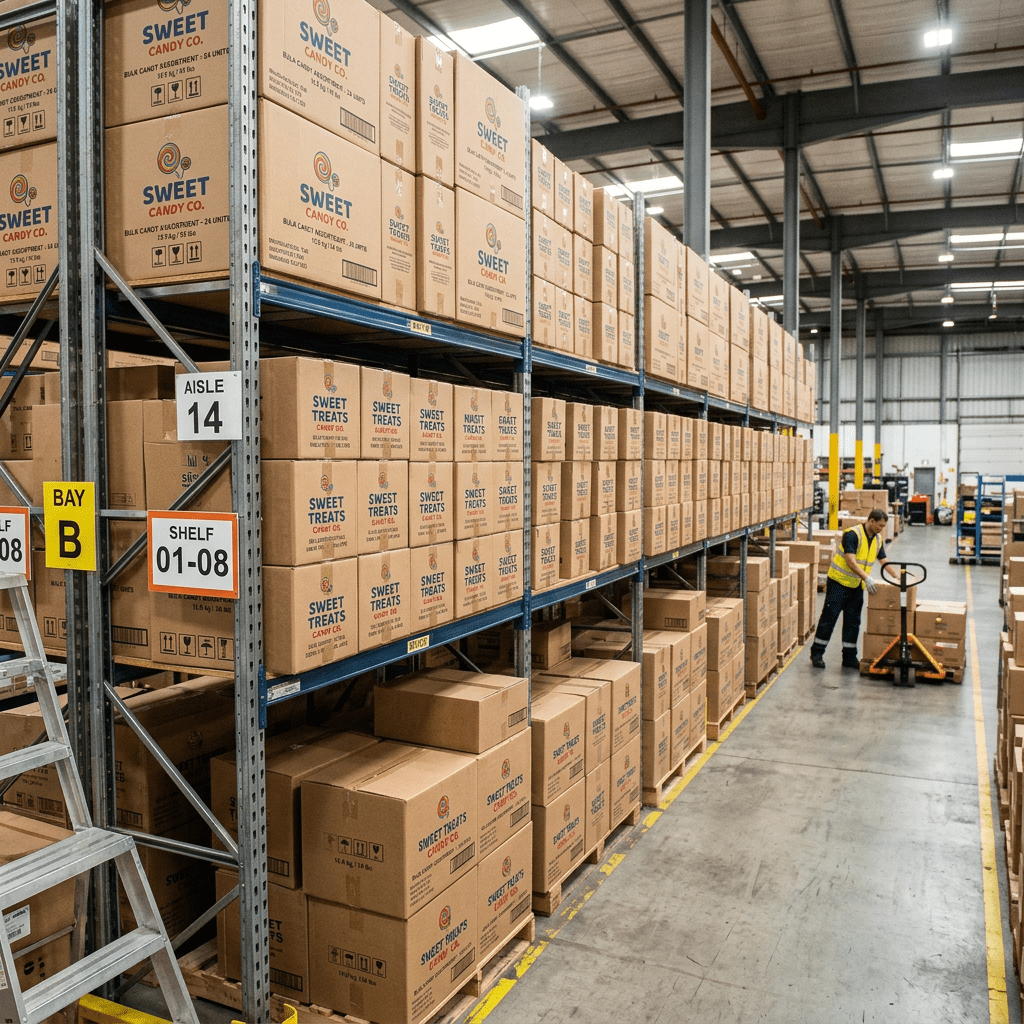
Warehouse aisle filled with stacked boxes labeled Sweet Treats by Sweet Candy Co., worker using pallet jack
A worker organizes boxes of Sweet Candy Co. treats in a spacious warehouse aisle.

Box storage is also critical. Any company utilizing a number of different box sizes may find difficulty keeping the shipping department organized. Shelves get crowded with supplies that cannot easily be located by employees. Employees may spend some extra time locating the correct box to utilize.

Utilizing a reduced quantity of selected candy box sizes can assist companies in creating a faster and efficient work place. Supplies can be stocked and counted more efficiently; supplies can be accessed easier; and employees can find the required supplies quicker.

In addition to choosing the right candy box size for packing purposes, many businesses also select sizes based on minimizing waste. With minimal amount of packaging material and supplies utilized during packing, it is advantageous for both the seller and buyer.

Choosing the right candy box size isn’t just about putting candy in a box. It is about creating packing easier, control costs, organize, and ensure products arrive safely. The decision made while packing small candies can result in great results, and finding the right size is one of the easiest things you could improve in your business.

Stop Crushed Chocolates

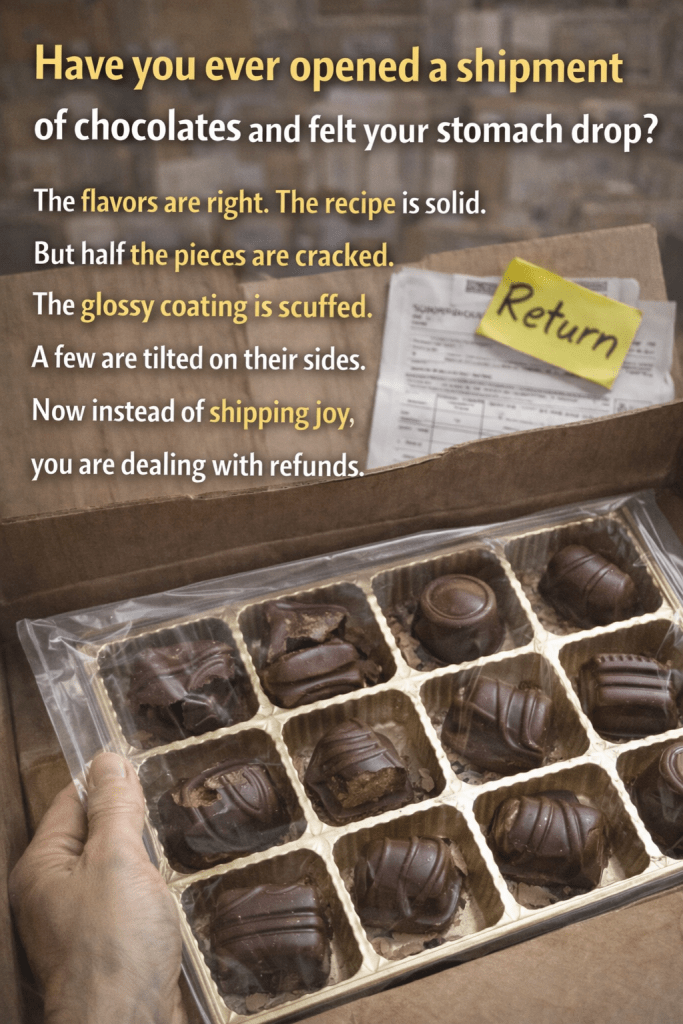
Have you ever opened a shipment of chocolates and felt your stomach drop? The flavors are right. The recipe is solid. But half the pieces are cracked. The glossy coating is scuffed. A few are tilted on their sides. Now instead of shipping joy, you are dealing with refunds.

Crushed candy is rarely about taste. It is usually about structure.

Candy boxes are more than containers. They are protection systems. If the structure is weak, pressure from stacking and transport presses down on the lid. That pressure transfers directly to the candy inside.

Start by thinking about board thickness. Lightweight cartons may look fine sitting on a shelf, but once they are stacked in transit, the top panel can flex. When the lid dips inward, even slightly, delicate chocolate shells can fracture.

Now imagine pressing gently on the top of a thin box. You feel it give under your fingers. That same pressure happens during shipping, only heavier and repeated many times.

Upgrading board weight creates resistance. A sturdier box keeps its shape under stacking pressure. When the top panel stays firm, the candy stays safe.

Next, consider internal support. Loose pieces inside a wide-open space move during transport. Each bump in the road shifts them slightly. That movement causes rubbing. Rubbing creates scuffs. Scuffs lower perceived freshness.

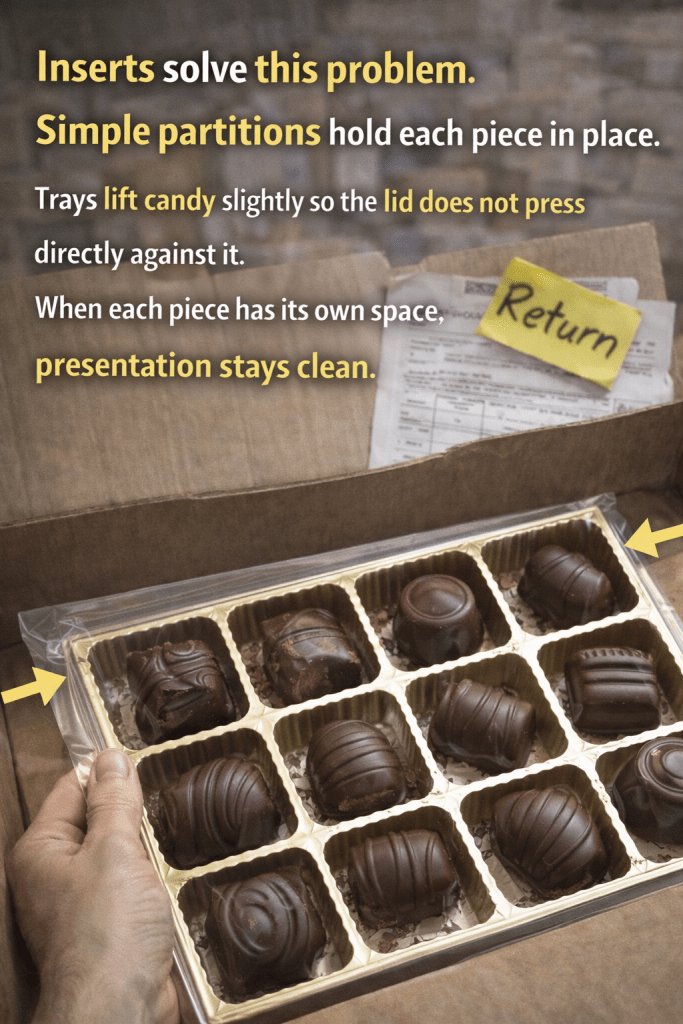
Inserts solve this problem. Simple partitions hold each piece in place. Trays lift candy slightly so the lid does not press directly against it. When each piece has its own space, presentation stays clean.

Think about lid design too. A secure closure prevents the top from popping open. If a lid shifts even a little, it can press unevenly against one side. That uneven pressure leads to breakage.

Picture a customer opening a box where every chocolate sits perfectly aligned. No cracks. No smears. The glossy finish reflects light cleanly. That moment feels premium. It feels worth the price paid.

Outer packaging also matters. Even strong candy boxes benefit from protective shipping cartons. Cushioning materials absorb impact before it reaches the inner box. Combining sturdy inner packaging with solid outer protection creates a double layer of defense.

Before choosing your next run of candy boxes, ask a few clear questions. How high will these be stacked? How far will they travel? Are the pieces delicate or firm? Will customers give them as gifts?

Answering those questions helps you choose the right structure and internal support. It is not about overbuilding. It is about matching protection to need.

When candy arrives intact, customers focus on flavor, not flaws. That positive first look sets the tone for the entire experience. Protect the structure, and you protect the product.

Ecommerce Packaging with a Single-Source Provider 

This is something that’s important for customers because the right supply chain means a successful business, and without a supply chain, it’s nearly impossible for a business to run, and you won’t be able to offer proper delivery to the clients that are there, no matter the company size.

When you’re able to offer dependability along the different aspects of the supply chain, you’ll be able to offer the best ecommerce experience, even during the hardest points of the year. Remember, the fourth quarter is always going to be the most busy season, but also the one that matters the most. The last thing that companies need is a supply chain that’s messed up, stopped, or delayed in any capacity. This of course, creates a major domino effect that’s hard for some people to handle. 

That’s why more and more people are considering partnering with single-source providers, rather than multiple providers, in order to offer a trusted experience for your packaging. This is a way to simplify the business, the management of this, and you’re able to let the internal resources be redirected to the correct locations. Why else does this matter though? Let’s dive in. 

It meets the Demands and Requirements 

Right now, there are now more requirements than ever before for certain packaging, especially that which impacts the environment. There is of course, new regulations as well for packaging.  There is now a tax for plastic packaging, and some places have even started to ban single-use items and plastics. 

That’s why it’s important to make sure that you also have the green requirements for your company as needed and working with someone that can offer it gives you a chance to meet the regulations that are there. being in line with the trends that are green is super important, and lets you pay attention to new changes. 

Better Logistics 

This is something that is important too, because logistics play a part. Single-source packaging offers a chance for you to take on the lifting that’s there and ensure that the business offers what’s needed.With a consolidated chain, you’ll be able to properly streamline the packaging, making it more efficient, and less time on tracking and paperwork. 

It also lets you boost the shipping too, so it’s sourced from the same location, and that way, there aren’t any delays or inconsistencies ruining this. It also saves you a ton of costs too, by helping you make and hit the goals.It’s also more strategized with the sourcing. With this time of the year being way busier than other times, the right supplier offers you a chance to get this in place. 

Packaging that’s on-Brand 

Tying into the first point, with the right single-source vendor, you’ll be able to keep a consistent brand image, improving the experience for consumers, repeat purchases, and more recommendations. 

Remember that packaging is the first point of contact, and the right types of images for your brand are ideal.

This is why single-source providers are important, because they make sure that everything works out, and they’re able to create custom options, choose options that work with the company and their aesthetic, and also help with the branding elements, accurately replacing them in every single scheme, especially for those that are needed.

Making sure that the packaging is correct is something that’s very important, and this is something that you have to make sure is in place. Single source allows you to do just this and gives you the best options for packaging vendors and your needs too. 

Choosing the right  Packaging Supplies for Products 

In the world of business, first impressions are what matter. The product packaging is an initial first step for most customers. More than just the outside though, it’s also what is within all of this. We understand the impact that packaging has on protecting a product’s essence as well. Using the correct packaging supplies allows for a product to be protected from the image that can happen during delivery. This criteria is good for selecting the correct shipping materials, satisfying the environmental and physical conditions, and to comply with the standards and preferences of your customers. 

How to Comply with Packaging Suppliers 

There are a few things that you will have to do to make sure that your packaging supplies comply.

Quality assurance is your foundation.   That’s something you need in place. If you don’t have that, you’re going to fall behind and possibly get into legal trouble. 

The first thing we do is implement the HACCP food and safety methods.   This is for making sure that the packaging we use does have some meticulous crafting in it, in order to meet the stringent hygiene and safety standards. This offers you some peace of mind, and that the products get handled with expertise and care. There’s also a commitment to ensure that the products you have are in good, safe hands. 

We also make sure that they are meeting the food and safety types of standards for your country. Our products do meet these, every single time you choose one.

So yes, there is peace of mind in knowing that this is a compliant and reliable system and is especially good for ensuring that it meets all of the legal levels. 

We also further understand the importance that comes with choosing the highest quality and safety for those who buy from us, so that’s why our commitment never wavers. So, when your partner is with us, you’re getting packaging that’ll meet, even exceed, the expectations. 

Consistent Checks for Quality 

We also make sure that no matter what goes out to you, it’s consistent in quality. 

Part of the dedication that we have to quality involves ensuring that all of the items that leave our facility do pass visual inspections, verifications of functionality, and procedures for rigorous testing.

Through scrutinizing the products, we ensure that the product packaging is flawless, and instills to uphold the trust that you’ve placed within each of us. 

Collaborative Measures 

We also believe in building the partnerships that we want to have with the customers we love. 

That means we provide collaborative approaches and engagement, in order to understand the requirements that you might have. Through this, we also provide a unique packaging solution that’s tailored to the specs that you want. So yes, you’re getting a product that’ll align with the needs. 

Finally, we value all opportunities to work directly with you, so that you get the highest satisfaction you can every chance you get. 

So what do you get from us? Total customer satisfaction! 

When you choose us, you can have peace of mind knowing that the packaging you’re getting will be top-quality and receive that utmost commitment to the overall customer satisfaction that’s there.   you’ll be able to strive and meet the expectations at that, and really make it worth it, because there’s a ton of amazing ways for you to get the most from your packaging.

So yes, you’ll be in good hands, filled with safe, reliable products when you partner with us, and it will be worth your while no matter what. 

Pack Candy Boxes Like A Pro

Nothing is worse than opening a candy box and finding chocolates that are melted, stale, or crushed. But with a few simple steps, you can make sure your candies stay fresh, look beautiful, and delight anyone who opens them. Picture the joy of handing someone a box of chocolates that look perfect and taste amazing.

Temperature matters. Most chocolates and candies stay fresh in a cool, dry place. Picture a cupboard away from direct sunlight or a pantry that isn’t too warm. 

Avoid storing candy boxes near ovens or windows where heat can sneak in. Keeping them cool prevents melting and preserves flavor.

Always store candy boxes upright. Imagine a box laying on its side—candies bumping into each other, wrappers crumpled, shapes damaged. Upright storage keeps chocolates in their original shape and neatly arranged, so when it’s time to gift or enjoy, they’re perfect.

Boxes that close snugly keep candies fresh longer. Magnetic lids, ribbons, or snap closures work best. Picture opening a box after a few days: the chocolates are just as fresh as the day you packed them. A proper seal is simple but makes a big difference.

Many candy boxes have compartments or inserts that separate pieces. If yours doesn’t, consider adding cupcake liners or parchment paper to prevent candies from touching. 

Imagine each piece sitting in its own spot, untouched and ready to delight. Inserts protect candies and make them look more elegant.

Moisture is a candy’s worst enemy. Keep boxes in dry areas and away from the fridge unless necessary for chocolate storage. 

Picture opening a box with no condensation, no sticky pieces, and no ruined chocolates. Dry storage preserves texture and flavor.

If you store multiple candy boxes, use older ones first. Imagine picking up a box that’s been waiting on the shelf—the chocolates inside still taste perfect because you rotated stock carefully. This simple step prevents anything from going stale.

For holidays or gifts, consider separating boxes by occasion or labeling them. Picture a box ready for Valentine’s Day, perfectly arranged and fresh, waiting to surprise someone. Planning ahead ensures your candy is ready to impress whenever needed.

Storing candy boxes is about protecting your treats and keeping the magic alive. Keep them cool, upright, sealed, and dry. Use inserts, rotate stock, and personalize for special occasions. Picture opening a perfectly packed candy box: chocolates intact, fresh, and ready to delight. A little care goes a long way to make each candy box a sweet experience.